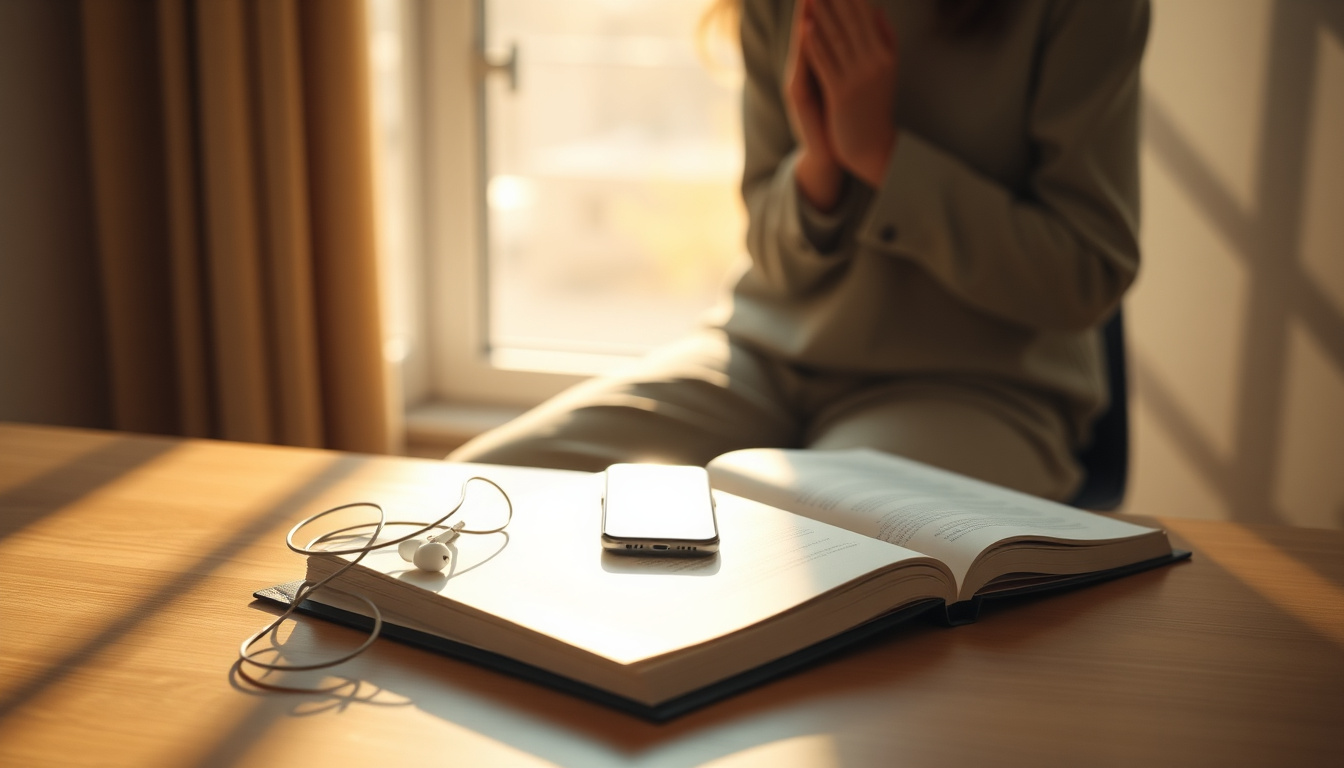
Dear friend,
It's 6:47 AM on the Kalyan-Dombivli fast local. I'm standing in that weird spot near the door where you can almost lean against something, phone in hand, and I notice the person next to me has been scrolling the same three Instagram posts for five minutes. The train is delayed (obviously). And I'm thinking back to November last year when that would've been me.
I used to know this feeling intimately. That pull. The compulsion to open WhatsApp even though I'd just closed it thirty seconds ago. The way I'd "just check Twitter for two minutes" and suddenly it's bedtime and I've absorbed twelve videos about things I don't care about and forgotten everything I actually needed to do today.
Let me tell you what changed and how.
The Honest Damage Assessment
Here's what nobody tells you about doom scrolling: it's not about the apps. It's about the bargain you've made with yourself without realising it.
I worked it out one evening using a simple calculator. Just plain maths. If I spend 40 minutes per day on social media (and I was easily doing more than that — the screen time app was horrifying), that's 280 minutes a week, roughly 14 hours, and about 730 hours a year. That's 30 full days of work-time. A whole month of 8-hour days, just... gone.
But that wasn't even the real cost, was it?
What the Numbers Don't Show
The actual damage lived elsewhere. I noticed it in patterns at work. My focus shifted every three minutes. I'd start analyzing a dataset and suddenly think, "Let me just check if someone replied on Slack." By the time I got back, my train of thought had vanished like the 6:15 AM local on a Tuesday.
I wasn't sleeping better, despite being "on" until 11 PM or midnight. My mind was still buzzing. That anxious, amped-up feeling where you're tired but also wired? That was my default state.
And relationships. God, I didn't even realise how bad it had gotten. A friend would be talking to me about something serious and I'd be half-listening, eyes drifting to my phone. Family dinners became performances where everyone's heads were down. My mum would literally say, "Put that away," and I'd get irritated. Which is its own kind of sad when you think about it.
The Real Wake-Up Call
I was commuting back from Mumbai one evening, deadlined exhausted, and realised I couldn't remember a single thing I'd read that day. Not one thing. Eight hours of consuming content and my brain had registered approximately zero. It felt like eating plastic and expecting nutrition.
That's when I asked myself: "What am I actually getting from this?"
The honest answer? Dopamine hits. Anxiety. A false sense of staying informed. FOMO dressed up as productivity.
The System I Actually Built (Not Some Bullshit Hack)
I didn't go cold turkey. That doesn't work. I've tried it. Three days of white-knuckle resistance and then you're back to square one at 2 AM scrolling Reddit because you "just needed to see something."
Instead, I designed something that felt less like punishment and more like a boundary.
Step 1: The Physical Separation
My phone stays in another room after 8 PM. Not on silent. Not in another tab. Physically in the other room. On my desk, not my bed.
This sounds dramatic. It's not. It's the difference between "I can access it if I really need to" and "I would have to stand up and walk to get it, which means I'd notice I'm doing it."
In the mornings, I don't check it until I've had tea and read for 15 minutes. Sounds small. It's not. Those 15 minutes feel like they belong to me in a way scrolling never did.
Step 2: The App Massacre
I didn't delete apps. I deleted the easy access. Twitter, Instagram, and Facebook came off my home screen. They're still there, sure, but now I'd have to search for them. That extra friction? It works.
I kept three apps on my home screen: Zerodha (because I check my investments), the Kindle app (because I'm trying to actually read), and Calm (because I'm trying to meditate, and yes, I'm aware of the irony).
Messaging apps — WhatsApp, Slack — stayed. But only in a folder. One extra tap. You'd be shocked how often that one tap stops you.
Step 3: The Replacement Behaviour
And honestly? This is the part that matters most.
You can't just remove something from your day and expect an empty space to fill itself with virtue. Your brain wants stimulation. It will find it.
So I replaced it intentionally. Boring notebook. Actual pen. I sit during lunch, no phone, and I write. Sometimes about work, sometimes about life, sometimes absolute garbage. But I'm writing, not scrolling.
I restarted a book that's been sitting on my shelf for two years. I'm averaging 20 pages a day now, which sounds nothing, but it's 140 pages a week and I can actually remember what I've read. Wild concept.
I walk. Just around Kalyan, nothing romantic. Earbuds off, phone in my pocket (but not in my hand). And I notice things. The chai shop guy knows my order now. The dog that barks at me every morning. It's stupid and simple and I feel less like a ghost in my own city.
The Numbers Three Months In
I'm a data person. So here's what actually shifted, measured:
| Metric | Before | After (3 months) |
|---|---|---|
| Daily screen time (hours) | 5.5–6 hours | 2–2.5 hours |
| Hours of sleep (average) | 6 hours 15 mins | 7 hours 20 mins |
| Books read | 0 (abandoned after 20 pages) | 2 complete books |
| Meditation sessions (per week) | 0 | 5–6 |
| Conversations with family without phone present | Maybe 20% | Probably 85% |
| Work tasks completed before noon | 1–2 | 4–5 |
The sleep improvement alone surprised me. I thought I was just tired because of age or the commute or life. Turns out a lot of it was my nervous system not switching off because blue light and notifications and the anticipation of checking my phone.
My work got noticeably better too. At Morningstar, a lot of what I do is pattern recognition — finding signal in datasets. That requires deep focus. When I can actually focus for 90 minutes straight without fracturing my attention, the work gets cleaner. Ideas connect. I'm not shocked by how much sharper everything became once I stopped fragmenting my attention into tiny pieces.
What This Actually Costs You (And It's Not What You Think)
I'm not going to pretend there isn't a trade-off.
I miss some things. There are events my friends post about and I don't see until much later. Some networking chatter on Twitter that I'm now out of. A few funny videos everyone's talking about that I never catch.
And you know what? I'm okay with that. Because what I gained back is literally time and mental space. It's clarity. It's the ability to have a complete thought that belongs entirely to me and doesn't get interrupted by someone's political take or a Reels algorithm trying to radicalise me into buying something I don't need.
I used to think staying "connected" was important. Now I think staying sane is important. Those aren't the same thing.
The Social Awkwardness (And How It Passes)
Initially, it was weird. In group situations, everyone's looking at their phones and I'm just... sitting there. Like I'm being rude by not checking my screen. But here's what happens: after about four weeks, you stop caring. And after three months, you realise the people worth knowing are the ones who notice you're actually present and they appreciate it.
Your attention becomes a currency again. And yes, that's a bit sad that we've gotten to a place where actually listening to someone is rare enough to be noted. But it's also an opportunity.
My Perspective
What surprised me most? It wasn't the time I got back. It was realising how much of my decision-making was being done by an algorithm I never agreed to consult.
I work with data every day. I know how recommendations work, how engagement is designed, what keeps people scrolling. But knowing it intellectually and experiencing it as a user are different. When I stepped back, I saw how much of my day was shaped by someone else's business model. My mood, my purchases, even what I thought was important — it was all being influenced by a feed designed by people I'll never meet who benefit from my attention.
That sounds dramatic until you experience it. Then it feels like basic hygiene.
The other thing? I got wrong about discipline. I used to think willpower was the answer — just be strong enough to resist. What actually worked was removing the choice. I didn't "resist" my phone after 8 PM. My phone was literally not there to resist. That's not strength. That's smart design of your own life.
I'd do this differently now: I wouldn't wait three years of degrading focus and sleep to try it. I'd just do it immediately. The cost of waiting is higher than the cost of changing.
Final Thoughts
Look, I know you're reading this on your phone probably while doing three other things. And I'm not here to tell you to quit everything and become a hermit in the hills. Life happens on screens now. That's just reality.
But you don't have to let screens happen to you without any say in the matter.
Small things work. Physical distance. Friction. Replacement behaviours. None of it is dramatic. It's just intentional.
The local from Kalyan to Mumbai will still be delayed tomorrow. And you'll probably be standing with your phone in your hand. But maybe you can try one thing: put it away for just the first ten minutes. Sit with the delay. Notice something real.
You'll be shocked what comes back when you stop running from the silence.
See you on the next local.
Dattatray Dagale
Data Analyst • Blogger • Mumbai
I'm a data analyst from Kalyan, Maharashtra, working at Morningstar. I write about personal finance, career growth, and everyday life for Indian millennials — the stuff I wish someone had told me earlier.
Written by Dattatray Dagale • 18 July 2026


.png)
.png)


0 Comments