Last Tuesday, on my 45-minute local train ride from Kalyan to Dadar, I got rejected for a credit card I didn't even apply for.
Let me explain. I was sitting in the 7:15 AM crowd, AirPods in, scrolling through my banking app on my OnePlus. I noticed a notification: "Your pre-approved credit card application has been declined." I hadn't filled any form. I hadn't clicked any link. Yet some invisible system had already made a decision about whether I was credit-worthy enough.
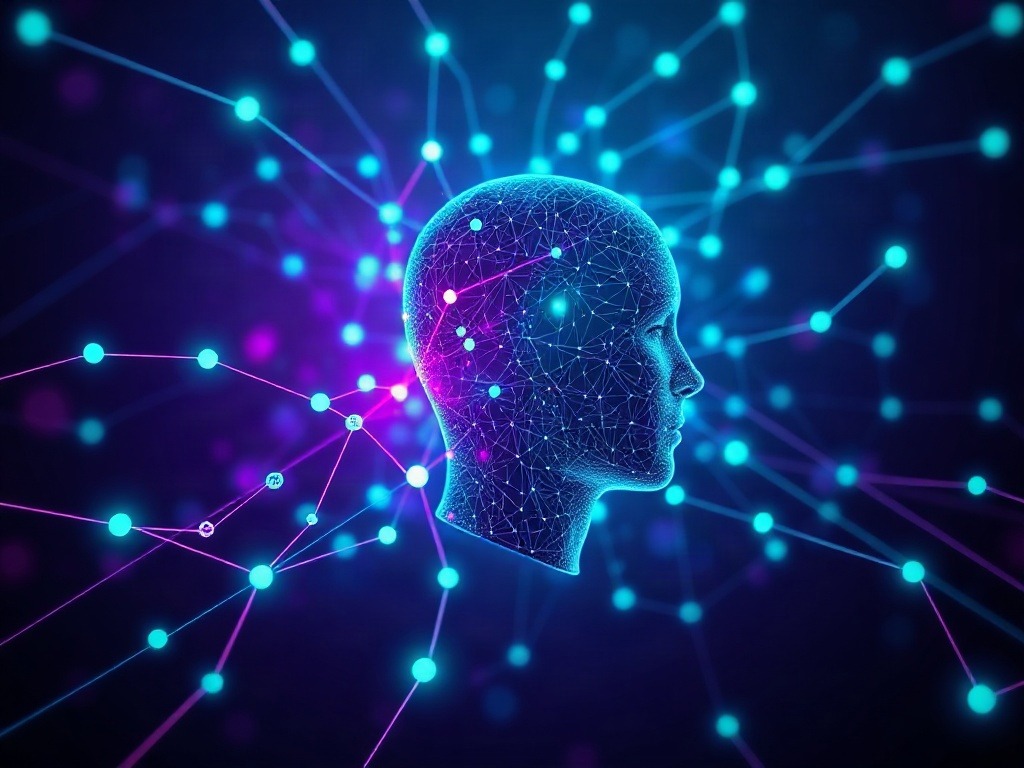
That system was machine learning.
I'm a data analyst. I work with numbers all day at Morningstar. I understand spreadsheets, dashboards, Python scripts. But in that moment, I realized I'd never really explained to myself—let alone anyone else—what machine learning *actually* is, beyond the buzzword.
And here's the thing: if you're an Indian millennial managing money, investing through Zerodha, paying bills on PhonePe, or trying to understand why Netflix suggests the exact show you were thinking about, machine learning is already running your life. You're just not seeing the engine.
Let me break it down the way I understand it now.
What Machine Learning Actually Is (Without the Tech Jargon)
Machine learning is not artificial intelligence with consciousness. It's not Skynet. It's not magic.
Machine learning is this: a computer program that learns patterns from data, and then makes predictions or decisions based on those patterns—without being explicitly told what to do.
That's it. That's the whole thing.
Let me give you an example from my own work. At Morningstar, we use ML models to flag suspicious mutual fund performance. The model doesn't have a rulebook that says "If a fund beats the market by 15% in one year, flag it." Instead, we feed it 10 years of historical data on 5,000 funds. The model looks at thousands of variables—volatility, sector concentration, expense ratios, manager tenure, everything. It finds patterns in what "suspicious" looks like.
Then when a new fund report lands, the model instantly compares it to those learned patterns and says, "This one looks off." No human wrote the rules. The rules emerged from the data itself.
Why It's Different From Regular Programming
When you write traditional code, you're explicit. You write: "If income > ₹50 lakhs, then show premium products." The computer follows that rule every single time, forever. It's predictable. It's boring. It's also limited—because you had to think of every possible scenario.
Machine learning flips this. Instead of you writing rules, the computer finds rules. You give it examples. The computer learns.
Think of it like learning to recognize whether someone is honest with you about their finances. I could give you a checklist: "If they refuse to show savings statements, red flag. If they borrow money every month, red flag." But that's brittle. A genuinely honest person might refuse statements for privacy reasons. A seasonal business owner might borrow every quarter legitimately.
A human learns patterns over time. Machine learning does the same thing, just faster and with more data points.
The Three Types You Actually Need to Know
Supervised learning is when you show the machine labeled examples. "This email is spam, this one isn't." "This loan defaulted, this one didn't." The machine learns from your answers and gets better at predicting new examples. Gmail's spam filter works this way.
Unsupervised learning is when you give the machine unlabeled data and say "Find patterns." No one told the algorithm that there are three types of investors, but Netflix figured it out by analyzing viewing habits. Customers cluster naturally into groups.
Reinforcement learning is when you let the machine take actions, reward it for good decisions, and punish it for bad ones. It learns by trial and error. This is how chess engines got superhuman (AlphaGo), and how Groww's robo-advisor might suggest rebalancing when markets move.
For everyday life in India? Supervised and unsupervised matter most. That's where your data lives.
How Machine Learning Actually Works (The Process)
This is where most people's understanding falls apart. They think machines "learn" like humans do—by reading and understanding concepts. No.
Here's the actual process:
Step 1: You Feed It Data (The Training Phase)
Imagine you're building an ML model to predict whether someone will default on their personal loan. You don't start with philosophy. You start with spreadsheets.
You collect historical data: 100,000 loan applications from the last 5 years. For each person, you record their age, income, credit score, employment stability, number of dependents, existing debt, interest rate, loan amount, and whether they defaulted or not.
That last column? That's your answer key. That's what you're training the machine to predict.
You divide this into two groups: 70% becomes the training data (what the machine learns from) and 30% becomes test data (what you use to check if it actually learned).
Step 2: The Algorithm Finds Patterns (The Learning Phase)
Now the magic happens. Well, not magic. Math. But it feels like magic.
The algorithm (let's say a "decision tree" or "neural network") looks at your 70,000 training examples. It tries to find relationships. It asks questions like: "If someone's credit score is below 600, how many of them defaulted?" "If their debt-to-income ratio is above 40%, what happens?" "Does employment stability matter more than age?"
The algorithm builds a mathematical model—basically, a weighted formula—that uses these patterns to predict default risk. It's not conscious. It's not "understanding." It's literally crunching numbers and finding which variables predict the outcome best.
Here's the important bit: the algorithm doesn't memorize. It *generalizes*. It tries to learn the underlying pattern, not just memorize "Person X defaulted."
Step 3: You Test It (The Validation Phase)
Now you use that test data you set aside. You show the model 30,000 loan applications it's *never* seen before and say, "Predict who will default."
You compare its predictions to what actually happened. If it got 85% right, that's decent. If it got 92% right, that's great. If it got 51% right, it learned nothing.
If performance is poor, you go back and adjust. Maybe you need more data. Maybe certain variables are noise. Maybe the algorithm you chose wasn't suited to this problem.
This is called iterative refinement, and it's the part nobody talks about but takes 80% of the time.
Where Machine Learning Is Already Making Decisions About Your Money
Here's what keeps me up on my commute from Kalyan. ML isn't a future thing. It's already embedded in every financial system you use.
1. Credit Scoring and Loan Approvals
Remember my credit card rejection? That was machine learning. No human reviewed my application. An algorithm trained on millions of approved and rejected applicants made a decision in milliseconds.
CIBIL, CRIF, and Experian don't hire humans to decide your score anymore. They use supervised learning models trained on historical default data. They know, with unsettling accuracy, who will default based on patterns in your past behavior.
The scary part? You often don't know what variables mattered. The model might have penalized you for something you don't even understand. This is called the "black box problem," and it's why RBI now requires explainability in certain cases.
2. Fraud Detection in Your Bank Account
Ever made a large purchase and your card got blocked? Then you got an SMS saying "Verify this transaction"?
That wasn't a human decision. That was an unsupervised anomaly detection model. The bank trained a model on your normal spending patterns—where you shop, how much you spend, what time of day, which merchants. When you do something radically different (like suddenly buying ₹80,000 worth of electronics at 3 AM in Bangkok), the model flags it as an outlier and blocks the transaction.
It learns what "normal" is for you specifically, not what's normal for everyone.
3. Investment Recommendations
When Groww shows you "Recommended for you" mutual funds, or when your portfolio app suggests rebalancing, machine learning is driving that. The system has learned your risk tolerance, investment history, market conditions, and fund performance patterns. It's making an educated prediction about what you'll want to buy next.
This one's interesting because sometimes it's genuinely useful, and sometimes it's just driving up AUM (assets under management) for the platform.
| Where ML Is Used | What It Does | Your Role |
|---|---|---|
| Credit Scoring | Predicts default risk from your history | You have limited control; pay bills on time |
| Fraud Detection | Flags unusual transactions | Verify alerts quickly; report false positives |
| Investment Recommendations | Suggests funds/stocks based on patterns | Research independently; don't blindly follow |
| Loan Pricing | Sets your interest rate based on risk | Build credit; improve your data profile |
| Insurance Claims | Predicts claim legitimacy, sets premiums | Keep accurate records; appeal if rejected |
Why Machine Learning Gets Things Wrong (And Why You Should Care)
Here's what nobody tells you: machine learning is not objective. It sounds scientific. It sounds fair. But it's trained on human data, which is biased. It learns our biases.
If a bank's historical data shows that people from certain postcodes default more often, the model will discriminate against those postcodes—even if the real reason is poverty, not character. If the data shows women entrepreneurs are riskier (which some datasets do, because they get smaller loans), the model will deny women credit at higher rates. The machine isn't malicious. It's just learning patterns from biased data.
This is called algorithmic bias, and it's destroying lives.
Then there's overfitting. Imagine a model that memorizes your training data so perfectly that it becomes useless on new data. It's like studying only previous years' exam papers so thoroughly that you can't answer a single new question. It happened to ML models in early pandemic—they trained on 2019 financial data and got destroyed in 2020.
And data drift: the world changes. Your income distribution, spending patterns, risk profile—they all shift. A model trained in 2022 might be obsolete by 2024. Banks have to constantly retrain their models.
The uncomfortable truth? Most financial institutions don't retrain as often as they should. Some models running right now are training on data that's 2–3 years old. And if you fall into a demographic that's radically changed since then, the model is making decisions about your life based on outdated patterns.
How to Protect Yourself in an ML-Driven World
I'm not going to tell you to "opt out" of machine learning. That's impossible. These systems run everything.
But you can be smarter about it.
First: understand what data you're generating. Every app, every transaction, every search creates data. PhonePe knows your spending patterns. CRED knows your credit behavior. Your bank knows everything. These aren't malicious companies (mostly), but they're training models on your data. Be aware of it.
Second: maintain your financial hygiene. You're being graded by algorithms every day. Late payments, high utilization, too many inquiries—these are all signals to ML models that you're risky. If you want better loan rates, credit card approvals, and investment recommendations, you need a clean financial record.
Third: don't blindly trust recommendations. When Netflix suggests a show, it's fine if it's wrong. When your bank's ML model denies you credit, that's not fine. When Groww suggests a stock allocation, research it independently. These models are tools, not oracles.
Fourth: ask for explanations. New RBI regulations require banks to explain credit denials. Use this. Understand *why* you were rejected. If it's algorithmic discrimination, you can appeal.
Fifth: diversify your financial identity. Don't rely on a single bank's credit score or one investment platform's recommendations. Build relationships with multiple institutions. The more diverse your data, the less a single biased model can hurt you.
My Perspective
I think about this stuff on my commute. Sitting in the CR (Central Railway) local at 7:15 AM, I'm literally surrounded by 2,000 people who are all being profiled simultaneously by algorithms. Every swipe of their Suica card, every bank transaction, every app they open—it's training models that will decide whether they get a loan, what interest rate they'll pay, whether their insurance claim gets approved.
Most of them have no idea. They're just trying to get to the office on time.
Here's what surprised me when I really dug into this: machine learning isn't magic or malevolent. It's just pattern recognition at scale. It's good at finding what actually predicts outcomes, which is why it's so powerful. But it's also blind to context, fairness, and the human stories behind data points.
I used to think ML would solve problems objectively. I don't anymore. I think it amplifies whatever problems already exist in our data. And since our financial data reflects historical inequalities, ML perpetuates them.
But I also think you can't fight it by ignoring it. You have to understand it, work within it, and slowly push institutions to be more transparent about how they use it. That's where change happens.
Final Thoughts
Machine learning isn't a future concern. It's deciding your financial future right now—your credit limits, your investment recommendations, your insurance premiums, even whether you get certain job opportunities.
The goal of this post wasn't to make you paranoid. It was to make you aware. Aware of what's happening behind the scenes. Aware of how your data is being used. Aware of the patterns these systems are learning about you.
And hopefully, aware that you're not powerless. You can't stop the algorithms, but you can clean up your financial life, stay informed about how they work, and demand transparency from institutions that use them to judge you.
Next time your credit card gets rejected, or a loan gets denied, or an investment recommendation pops up—you'll know what actually happened. You'll know that somewhere, a model trained on millions of data points made a decision about you in milliseconds. You'll know it's not infallible. And you'll know that you can ask why.
That knowledge is power. Use it.
Dattatray Dagale
Data Analyst • Blogger • Mumbai
I'm a data analyst from Kalyan, Maharashtra, working at Morningstar. I write about personal finance, career growth, and everyday life for Indian millennials — the stuff I wish someone had told me earlier.
Written by Dattatray Dagale • 01 November 2026








0 Comments