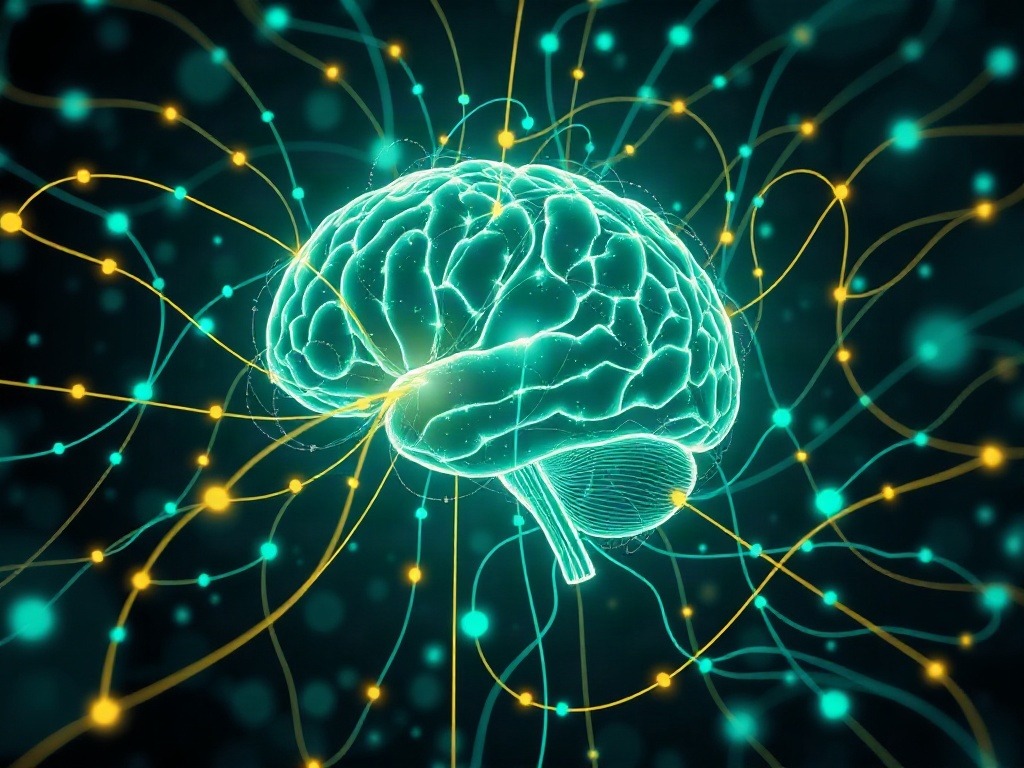
Dear younger me (or whoever's reading this from Kalyan),
Last month, I was on the 7:42 AM local from Kalyan Junction to Dadar — you know, the one that's always packed by Dombivli — and I overheard two guys talking. One of them said, "Bro, machine learning will replace all of us. It's AI. It's finished." The other guy nodded like he'd just heard the meaning of life.
I wanted to tap them on the shoulder and say: You're scared of something you don't actually understand.
And I get it. When you work in data and finance like I do — I've been at Morningstar for a few years now — you hear "machine learning" thrown around constantly. It sounds like magic. Like robots thinking. Like the future. But here's what nobody tells you: machine learning isn't magic. It's just math. Efficient, smart math. But math.
I'm writing this because I used to be confused too. I studied Economics, not Computer Science. When I first heard about machine learning at work, I nodded along in meetings while understanding maybe 40% of what was being said. That's embarrassing to admit, but it's true. So I'm going to explain what machine learning actually is — in a way that makes sense, without making you feel dumb.
Machine Learning Is Just Pattern Recognition on Steroids
Let me start with the simplest definition I can give you.
Machine learning is a computer program that learns from examples instead of being told exactly what to do. That's it. No magic. No consciousness. No "Skynet" scenarios.
Think about it this way: When you first moved to Mumbai, you didn't have a mental rule book that said "If train is at platform 3 at 7:42 AM, board immediately." You just experienced it. You saw patterns. Overcrowded platforms. Delayed trains. The rhythm of rush hour. After a few months, you just *knew* when and how to commute. Your brain learned from examples.
That's what machine learning does. Except instead of learning how to navigate Mumbai, it learns things like:
- Whether an email is spam or not (based on thousands of emails it's seen before)
- What song you might like next on Spotify (based on what you've already listened to)
- Whether a loan applicant is risky or safe (based on thousands of past loan cases)
- How much your stock portfolio might be worth in 6 months (based on historical price data)
Here's the honest part: I didn't realize this until I actually started working with data. I thought machine learning required some sort of artificial intelligence that could "think." But it doesn't. It just needs three things:
1. Data (Lots of It)
The computer needs examples to learn from. If you want to teach a machine to recognize whether a photo contains a cat or a dog, you need to show it thousands of cat and dog photos. This is why companies like Google collect so much data — it's their training material.
In my work at Morningstar, we do this constantly. We feed historical stock data, company financial statements, market trends — massive amounts of data — into our models so they can learn patterns.
2. An Algorithm (The Learning Method)
An algorithm is just a set of mathematical steps that the computer follows to learn from that data. Different problems need different algorithms. Think of it like learning styles — some people learn by reading, some by doing, some by listening. Algorithms are the same way.
3. Computing Power (To Process Everything)
All that data and math? It requires serious computing power. This is why machine learning became mainstream only in the last 10-15 years — computers finally got fast and cheap enough to do all this processing.
Here's How It Actually Works (Without the Jargon)
Okay, let me walk you through an actual example. Let's say Zerodha (the trading app you probably use) wants to predict whether you're likely to make a trade in the next week.
Step 1: They collect data. They look at 100,000 users and track things like:
- How often you log in
- How many times you check your portfolio
- What time of day you're most active
- Whether you traded or not that week
Step 2: They feed this data into an algorithm. A simple one might work like this: "If someone logs in more than 3 times a day AND checks their portfolio during market hours AND has at least ₹50,000 in their account, they're 75% likely to trade." (I'm simplifying massively here, but you get the idea.)
Step 3: The computer tests this rule. It applies it to users it hasn't seen before and checks: "Did we predict correctly?" If we got it right 60% of the time, great. If only 40%, we need a better rule.
Step 4: The algorithm adjusts itself. It tweaks the numbers. Maybe it realizes that time of day doesn't matter as much as login frequency. Maybe it figures out a new pattern. It keeps doing this until it gets really accurate.
Step 5: Once it's accurate enough, it goes live. Now, every time you log into Zerodha, the model is quietly predicting whether you'll trade today. It might even send you a notification like "Markets are volatile — good time to review your portfolio?"
That's machine learning. Not magic. Just learning from examples and adjusting the rules.
Different Types of Machine Learning (The Three Main Ones)
Not all learning works the same way. There are different approaches, and knowing which is which helps you understand why certain predictions work and others don't.
Supervised Learning: Learning With a Teacher
This is when you have labeled examples. You say to the computer: "Here are 1,000 emails. These 600 are spam, these 400 are real." Now the computer learns the difference and can classify new emails automatically.
Used for: Email filtering, loan approval decisions, disease diagnosis from medical images, predicting house prices based on past sales.
Why I like this one: It's straightforward. If you have clear examples of what you want to predict, this works really well. This is what we use a lot at Morningstar when predicting fund performance.
Unsupervised Learning: Learning Without a Teacher
Here, you give the computer a bunch of data with no labels and say: "Figure out what patterns exist." The computer groups similar things together without being told what to look for.
Used for: Customer segmentation (grouping similar customers), detecting fraud patterns, discovering new product categories, organizing large datasets.
Example: Netflix doesn't tell the algorithm "These are action movies, these are dramas." It just feeds it all the data — movies people watched, ratings, genres — and the algorithm figures out natural groupings. Then it uses those to recommend shows.
Reinforcement Learning: Learning Through Trial and Error
The computer takes actions, gets rewarded for good ones and punished for bad ones, and learns over time. Like training a dog with treats and scolding. Or like how you learned the Mumbai local system — by trying different things and learning what works.
Used for: Game-playing AI (like AlphaGo), robot control, autonomous vehicles, trading algorithms.
Honestly? This one is the most fascinating to me, but also the most complex. It's still being figured out.
| Type | How It Works | Real-World Example | Difficulty Level |
|---|---|---|---|
| Supervised | Learns from labeled examples (teacher shows the answer) | PhonePe detecting fraudulent transactions | Medium |
| Unsupervised | Finds patterns in data without labels | Amazon grouping customers into segments | Hard |
| Reinforcement | Learns through rewards and punishments | Trading bot learning to buy/sell stocks | Very Hard |
Where Machine Learning Is Already In Your Life (And You Didn't Even Know)
This is the part that shocked me when I started paying attention.
Machine learning isn't some distant future thing. It's already everywhere in your daily life as an Indian millennial. And honestly? That's both cool and a little unsettling.
Your phone: Face unlock on your smartphone? That's machine learning. It learned your face from hundreds of photos and can now recognize you instantly — even if you grow a beard or wear glasses.
Apps you use: Groww recommends stocks based on what similar investors bought. CRED suggests credit card offers based on your spending patterns. Instagram's feed is sorted by a machine learning algorithm that predicts which posts you'll engage with. YouTube's "Up Next" recommendations? Same deal.
Banking and finance: When you apply for a loan, a machine learning model is quietly evaluating your creditworthiness. It's looking at thousands of past loan cases and figuring out if you're risky or safe. The interest rate you get might be determined by a machine learning algorithm, not a person.
Healthcare: Diagnostic imaging uses machine learning to spot tumors, fractures, and diseases faster than human doctors.
Transportation: Google Maps predicts traffic using historical data and real-time input. Uber's surge pricing is influenced by machine learning models predicting demand.
The reason I mention all this? I want you to understand that machine learning isn't theoretical. It's practical. It's affecting your financial decisions right now, whether you understand it or not. And that's why you should understand it at least a little.
The Real Limitations (What Machine Learning Can't Do)
Alright, I need to be honest about something. People get excited about machine learning and think it can do anything. It can't.
Machine learning is really good at one thing: finding patterns in existing data. But it has serious limitations.
It needs historical data. If something has never happened before, machine learning can't predict it. The COVID crash in 2020? Most models got that wrong because they'd never seen anything like it in the training data.
It's only as good as the data you feed it. This is huge. If your training data is biased, your model will be biased. If your data is old, your model will make outdated predictions. This is called "garbage in, garbage out" in the industry.
It can't explain itself easily. Sometimes, the best machine learning models work really well, but nobody can exactly say *why* they made a specific decision. This is a problem in finance and healthcare where you need explanations. (A bank can't tell you "We rejected your loan because of our machine learning model" without explaining why.)
It can't do things outside its training. A model trained to predict stock prices can't suddenly tell you how to fix your relationship. It's specialized. Very specialized.
My Perspective: What I Actually Think About This
I'll be real with you. When I first learned about machine learning, I thought I was behind. Everyone else seemed to understand it, and I felt dumb. I'm still figuring out parts of it, and that's okay.
On my commute from Kalyan to Mumbai — and I've thought a lot about this during those 90 minutes on the local — I realized that the fear around AI and machine learning isn't actually about the technology. It's about understanding. People fear what they don't understand.
That guy on the train? He wasn't scared of machine learning itself. He was scared of losing his job without understanding how. And honestly, I can't fault him for that.
But here's what changed my mind: Machine learning is just a tool. Like Excel. Like a calculator. Yes, it's more powerful and more complex, but it's still a tool. And tools don't destroy careers — people who understand tools do better than people who don't.
What surprised me most is how *mundane* machine learning actually is once you understand it. There's no magic. No consciousness. Just mathematics and data. And somehow, knowing that made it less scary.
I used to think machine learning would replace analysts like me. Now I think it'll replace analysts who *don't* understand machine learning. That's different.
Final Thoughts
Look, you don't need to become a data scientist. You don't need to learn Python or mathematics at an advanced level (unless you want to — and if you do, that's cool too).
But you need to understand *what* machine learning is, *how* it works at a basic level, and *where* it's already affecting your life. Because it is. Every single day.
When you understand machine learning, you make better decisions. You understand why your credit card application was rejected. You get why your Instagram feed looks the way it does. You realize that recommendations aren't magic — they're just patterns. You know why some predictions are reliable and others are garbage.
And in a country like India, where data is becoming the new oil and AI is the next big investment boom, understanding this stuff gives you an edge. Not a massive one. But an edge nonetheless.
So next time you hear someone talking about machine learning like it's magic, you can smile and think: "Actually, I know what this is. It's just smart pattern recognition. And honestly? That's pretty cool."
Stay curious. Stay skeptical. And most importantly, don't let fear of what you don't understand hold you back.
See you on the 7:42 local.
— Dattatray
Dattatray Dagale
Data Analyst • Blogger • Mumbai
I'm a data analyst from Kalyan, Maharashtra, working at Morningstar. I write about personal finance, career growth, and everyday life for Indian millennials — the stuff I wish someone had told me earlier.
Written by Dattatray Dagale • 04 September 2026




.png)
.png)


0 Comments