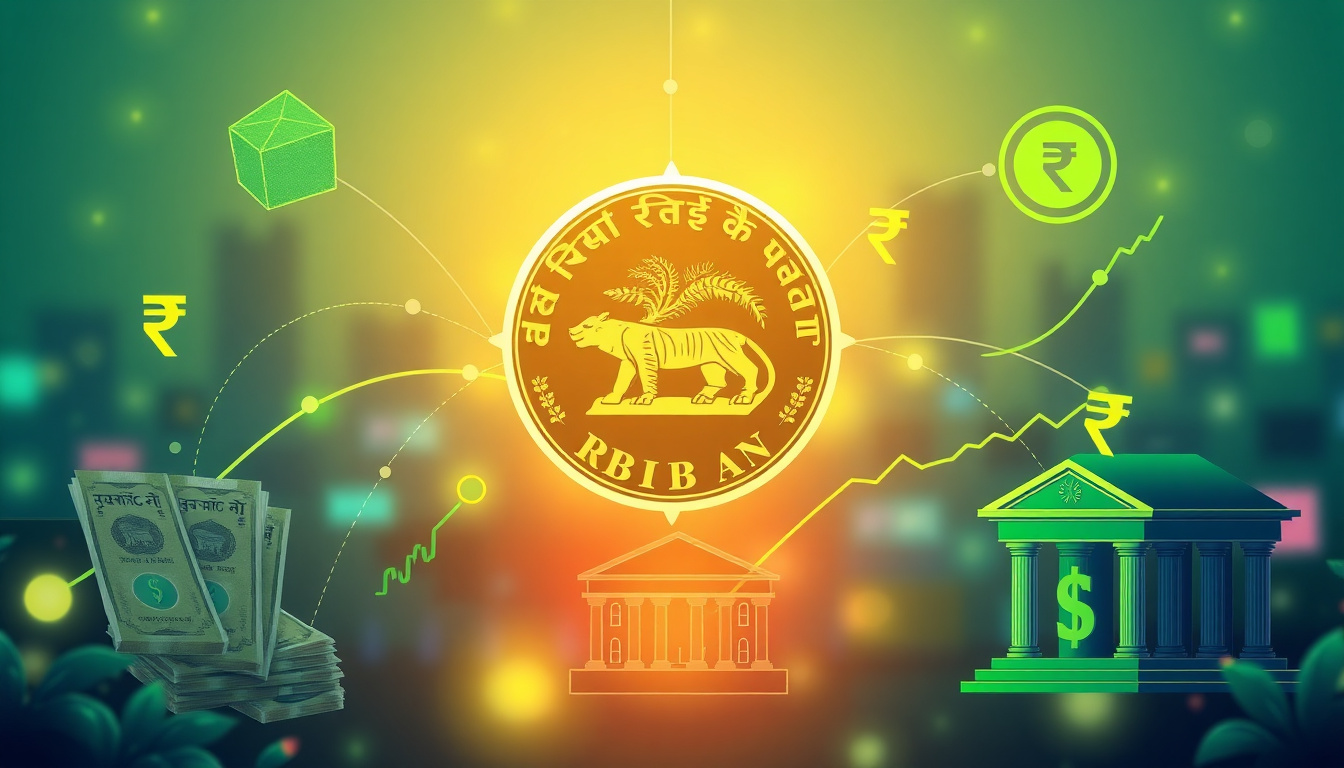
Last year, I sat in my apartment in Kalyan after a particularly frustrating day at work. My savings account was earning 3.5% interest. My Zerodha brokerage account showed me equities that had been flat for months. My CRED wallet had ₹2,400 sitting unused. And yet, I couldn't figure out why my purchasing power felt weaker despite no major life changes.
I blamed inflation. I blamed my salary growth. I blamed everything except the one thing actually moving the needle: I had no idea what the RBI was actually doing with interest rates, and how it trickled down to my everyday money.
I studied Economics in college. I work in data analysis at Morningstar. I should have known better. But knowing what something is and understanding how it affects your actual life — your savings, your loans, your investment returns — are two completely different things.
Here's what I got wrong. And here's what actually matters.
What I Thought I Knew About RBI (And Why I Was Half-Right)
The Textbook Version Wasn't Wrong, Just Incomplete
If you'd asked me two years ago what the RBI does, I would have given you the answer I memorized for my undergraduate Economics exam: "The Reserve Bank of India is the central bank. It controls monetary policy. It sets the repo rate. This controls inflation."
Technically correct. Practically useless.
The repo rate — the interest rate at which banks borrow money from the RBI overnight — felt like an abstract number announced every two months. 5.5%. 6%. 6.5%. It sounded important. The financial news channels would erupt. But it didn't feel real to my life.
That was my first mistake: treating RBI policy like it was something that happened to "the economy" rather than to me.
The Invisible Chain I Ignored
Here's what I didn't connect until much later: the repo rate isn't just a number. It's the domino that knocks every other domino in your financial life.
When the RBI raises the repo rate, banks have to pay more to borrow money. So they raise the lending rates they offer to you. Your home loan EMI goes up. Your car loan becomes more expensive. Your credit card interest rate climbs.
When the RBI cuts the repo rate, the opposite happens. Theoretically.
But I wasn't paying attention to the "theoretically" part. I was just living through it, confused about why my savings account interest dropped 0.5% even though my bank kept sending me happy notifications about "market-leading rates."
I used to think: RBI changes rates → banks adjust → that's it.
What I missed: RBI changes rates → banks adjust (slowly, sometimes not at all) → your purchasing power changes → inflation eats into your real returns → your investment strategy needs to shift → your life plans get affected.
How RBI Rate Cuts Actually Hit Your Savings Account
The FD Rate Drop That Nobody Talks About
In 2022, when the RBI was cutting rates aggressively, my Fixed Deposit with ICICI Bank was earning 6.5% on a 1-year tenure. I was smug about it.
By mid-2023, when I went to renew that FD, the same bank was offering 4.8%.
This wasn't the bank being greedy. This was the repo rate cut cascading down. When the RBI makes money cheaper for banks to borrow, banks have less incentive to pay you attractive returns on your savings. They're not desperate for your deposit anymore.
Here's the brutal part: I had ₹4 lakhs in that FD. The difference between 6.5% and 4.8% meant losing ₹6,800 annually. Over a 5-year ladder of FDs, that's ₹34,000 I wasn't going to make.
And nobody — not my bank relationship manager, not the financial news I half-watched, not my own instincts — pushed me to think about what my money should do in a rate-cutting environment.
Why Savings Accounts Became A Joke
My primary savings account with HDFC has been at 3.5% interest for years. Inflation (depending on which measure you use) hovers around 5-7%. Do the math: I'm losing purchasing power by keeping money in a savings account.
RBI policy affects this directly. When rates are low, banks have no reason to compete aggressively for deposits with savings account holders (you're not a big enough money-maker for them). When rates rise, suddenly you see 5%, 5.5%, 6% offers from banks trying to lock in deposits before costs rise further.
The problem? Most millennials I know just leave money in savings accounts and don't think about it. We're conditioned to believe it's "safe." And it is. But "safe" when you're losing 2-3% annually to inflation isn't really safe — it's just slowly getting poorer while feeling secure.
The Loan Side Nobody Warns You About
Why Your Home Loan EMI Stayed High Even After RBI Cuts
This one genuinely surprised me. In 2022-2023, when the RBI was cutting rates, I assumed my home loan EMI would drop immediately. It didn't.
Here's why: most of us don't have floating-rate home loans. We have fixed-rate loans. The bank locked in your rate when you took the loan, and they're not voluntarily cutting it just because the RBI cut the repo rate.
But even people with floating-rate loans (which adjust automatically based on RBI policy) don't always see immediate relief. Banks use something called "base rate" or "MCLR" (Marginal Cost of Funds-based Lending Rate) to set your actual lending rate. The RBI can cut the repo rate 2-3 times, but your bank's MCLR might lag by quarters.
Why? Because banks have their own costs and margins to protect. They're not charities. When the RBI makes money cheap, banks still need to make money on lending. They'll eventually pass on cuts, but not always dollar-for-dollar.
I watched my friend Rahul with a floating-rate car loan. RBI cut by 250 basis points over six months. His EMI dropped by 100 basis points. The difference? His bank pocketed it as higher margin. He was frustrated. He had no idea this was how it worked.
Credit Card Rates (The Silent Killer)
Your credit card interest rate — usually 36-48% annually — barely budges with RBI policy. Even if rates are cut, credit card companies keep rates where they are.
Why? Because credit card lending is riskier (you might default), so the risk premium stays high. RBI policy affects the cost of funds, but not the risk calculation.
But here's what I got wrong for years: I thought high credit card rates were unavoidable. In reality, they're a signal to not carry credit card balances. Ever. Period. I used to pay interest on my HDFC credit card at 40% per annum because I was rotating balances month-to-month (dumb, I know).
An RBI rate cut didn't change this reality. The reality was: don't use credit cards as loans.
How RBI Policy Actually Changes Your Investment Returns
The Stock Market Connection I Missed
When the RBI cuts rates, stock markets usually rally. When it hikes, they often fall.
I knew this intellectually. But I didn't understand why until I started thinking about it from a money-allocation perspective.
When interest rates are high, your FD gives you 7%. Why would you take the risk of investing in equities for maybe 10-12% returns? So money moves to FDs. Stocks sell off.
When interest rates are low, your FD gives you 4.5%. Suddenly, 10% returns from equities look attractive. Money floods into stocks. Prices rise.
This is why my equity SIPs (I use Groww and Zerodha) performed terribly in 2022 (when rates were rising) and bounced back in 2023 (when rates were cutting and expectations of future cuts built in).
Here's the shocking part: I wasn't adjusting my SIP amounts based on rate environment. I was just doing ₹10,000 every month, mechanically, regardless of whether equities were attractive or not.
A smarter approach (which I'm only now implementing) is to increase SIPs during rate-cutting cycles when valuations compress, and maintain or reduce them during rate-hiking cycles when FDs become competitive.
Bond Prices and Why This Matters To You
If you have any debt mutual funds or government bond holdings, RBI policy directly affects their value.
When rates fall, existing bonds become more valuable (their fixed coupon looks better relative to new bonds issued at lower rates). When rates rise, they lose value.
I learned this the hard way. I had some bond fund holdings (through Groww), and when the RBI started hiking in 2022, my NAVs dropped 8-10%. I panicked and sold. Classic mistake: selling after losses.
What I should have understood: bond funds are perfect for a low-rate environment (when you lock in returns before rates fall). They're terrible in a rising-rate environment (better to just buy FDs and wait for bonds to trade at better prices).
This is where RBI policy becomes crucial to asset allocation. Not as economic theory. But as a real decision-making tool for your portfolio.
| RBI Rate Environment | FD Returns | Stock Market Likely | Best Action |
|---|---|---|---|
| Hiking Cycle (Rates Rising) | Going up | Downward pressure | Lock in FD rates, reduce SIPs or wait |
| Cutting Cycle (Rates Falling) | Going down | Rally expected | Increase SIPs, avoid FDs, consider bonds |
| Pause/Hold (Rates Steady) | Stable | Mixed signals | Balanced approach, maintain discipline |
My Perspective
I sat in my Economics classroom in college when Professor Desai was explaining monetary policy transmission mechanisms. Everyone was half-asleep. I was taking notes mechanically, thinking: "When will I ever use this?"
Fifteen years later, I'm realizing: this stuff matters. A lot. Not because it's economically interesting (it is), but because it's financially personal.
What surprised me most? How slowly banks pass on RBI cuts to savers. The textbook assumes instant transmission. Reality: banks drag their feet. Your savings account interest can take 6-12 months to reflect a full RBI cut cycle. By then, inflation has already eaten into your real returns. It's unfair. It's also how banking works.
What I got wrong: I treated RBI policy as something economists and bankers cared about, not something I needed to track. Wrong. The RBI policy announcement every two months should trigger a review of your FD ladder, your equity allocation, your bond holdings. It doesn't require expertise. It requires awareness.
If I could restart, I'd have a simple rule: When RBI cuts, shift money toward equities. When RBI hikes, lock in FD rates and reduce equity exposure. Not perfectly, not by selling everything. But thoughtfully.
Final Thoughts
The RBI doesn't operate in some distant financial sector that has nothing to do with your life. It's operating in your savings account every single day. In your loan EMI. In the value of your equity holdings. In the real purchasing power of your money.
You don't need to become an RBI policy expert. You don't need to predict where rates are going (honestly, most economists get this wrong anyway). You just need to know: When rates are high, debt instruments become attractive. When rates are low, equities become attractive. Plan accordingly.
The next time you read that the RBI cut rates by 25 basis points, don't just nod and scroll. Ask yourself: What should I do differently? Should my FD ladder change? Should my SIP amount change? Should I lock in a loan now or wait?
Small decisions, consistently applied over years, compound into real wealth differences. I'm still figuring out exactly how to execute this. But at least now I'm not just watching my money sit in a savings account, confused about why it's getting weaker.
You don't have to be.
Dattatray Dagale
Data Analyst • Blogger • Mumbai
I'm a data analyst from Kalyan, Maharashtra, working at Morningstar. I write about personal finance, career growth, and everyday life for Indian millennials — the stuff I wish someone had told me earlier.
Written by Dattatray Dagale • 29 July 2026



.png)
.gif)



0 Comments