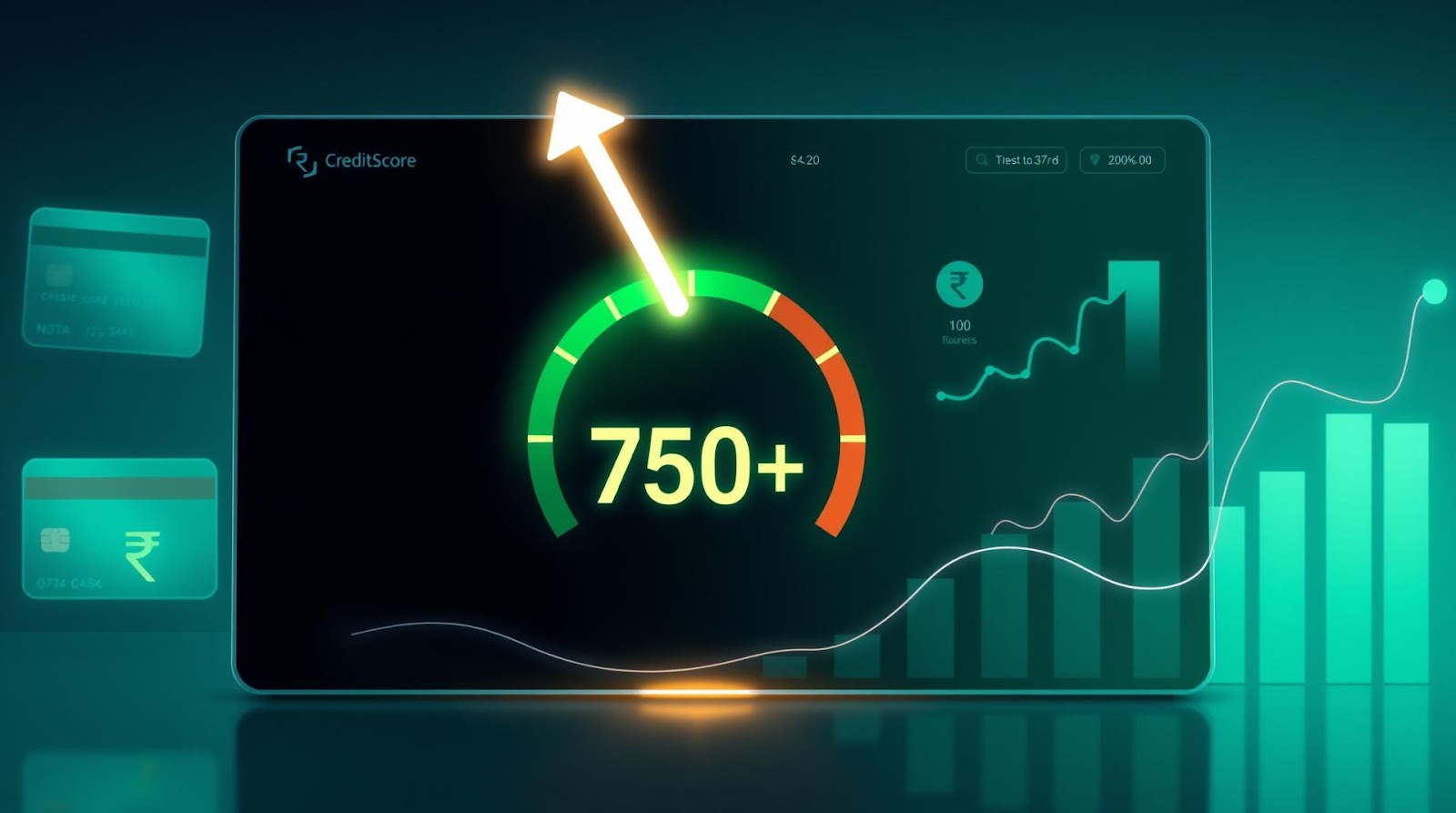
I was 26 when I realized my credit score was 580.
Not great. Not the worst either, but the kind of number that makes banks look at your loan application and politely say "maybe next time." I'd been earning decent money, paying my credit card bills (mostly on time), and generally thought I was doing fine financially. Turns out, I was clueless.
The thing is, credit scores in India aren't some mystical number that banks decide on a whim. They're calculated, predictable, and — this is the kicker — completely within your control. I spent the last three years fixing mine, and honestly? It changed more than just my ability to get loans. It changed how I think about money.
So let me walk you through this. Not the boring textbook version. The actual version.
What Actually Is a Credit Score and Why Should You Care
Your credit score is basically a three-digit number (between 300 and 900 in India) that tells lenders: "How likely is this person to pay me back?"
Think of it like your financial reputation. Just like you wouldn't lend money to that friend who ghosted on your last ₹500, banks won't give you a loan if your score suggests you're risky. Simple as that.
And here's where most people get it wrong: they think credit scores only matter when you need a loan. Wrong. Here's what actually depends on your score:
- Loan approvals and interest rates — A 750+ score can get you rates 0.5–1% lower than someone at 650. Over a ₹25 lakh home loan, that's easily ₹1–2 lakh in savings.
- Credit card approvals — Banks literally won't approve you for premium cards (with better rewards, lounge access, etc.) unless your score is decent.
- Rental applications — Landlords in metros increasingly check credit scores. I know someone who got rejected because of it.
- Job applications — Some companies (especially in finance) check credit scores as part of background verification.
And honestly? It's also about self-respect. I remember the feeling of getting rejected for a credit card and having to explain why to the bank executive. Not fun.
How Your Credit Score Gets Built (The Mechanics)
Here's the part most people skip but shouldn't. Understanding how your score is calculated is the difference between accidentally improving it and intentionally building it.
The Five Components That Matter
| Component | Weight | What It Means |
|---|---|---|
| Payment History | 35% | Did you pay your bills on time? Every. Single. Time. |
| Credit Utilization | 30% | How much of your available credit are you using? (Lower is better) |
| Credit Mix | 15% | Do you have different types of credit? (Cards, loans, etc.) |
| Credit Age | 10% | How long have you been borrowing? Older accounts = better |
| Inquiries | 10% | How many times did you apply for new credit recently? |
Payment history is the king here — 35% of your entire score. Miss one payment by even a few days and it stays on your record for years.
What I Learned About Credit Utilization (The Hidden Killer)
This one surprised me when I started digging into my score. Credit utilization is the percentage of your credit limit that you're actually using.
Say you have a credit card with a ₹1 lakh limit. If your monthly bill is ₹60,000, your utilization is 60%. Banks see high utilization and think: "This person is desperate for credit. They might default."
The recommendation? Keep it below 30%. Ideally below 10%.
And here's the trap: a lot of young professionals I know have one credit card and max it out every month. They think "I'm paying it off fully, so it's fine." Wrong. Your score gets calculated based on the balance reported to CIBIL — which happens on your statement date, not your payment date.
So even if you pay the full balance, if you're using 80% of your limit, your score tanks.
When I realized this, I did something different. I applied for another credit card (not to spend more, but to increase my total available credit). My two cards had a combined ₹2 lakh limit. Same ₹60k spend now meant 30% utilization instead of 60%. My score jumped by 40 points in three months.
The Actual Steps I Took (And You Can Too)
Step 1: Set Up Automatic Payments
Seriously. This is non-negotiable.
I was manually paying my credit card bills, and once I missed it by 5 days because I was traveling. One. Missed. Payment. And my score dropped 30 points.
Now? Every credit card, every EMI, every loan payment is on autopay. I use CRED (which actually gives you cashback for paying on time — nice), but your bank app works too. PhonePe and Google Pay also have autopay features.
The goal is simple: never miss a payment again. Not by a day, not by an hour.
Step 2: Lower Your Credit Utilization (Without Canceling Cards)
Two approaches here:
Approach A: Get more credit. Apply for another credit card or ask your bank to increase your limit. This immediately lowers your utilization ratio. I did this and it worked within weeks.
Approach B: Pay strategically. If you can't get more credit, pay your credit card twice a month. Once mid-month and once before the statement date. This keeps your reported balance low.
Don't cancel old cards though. Here's why: canceling a card reduces your total available credit (which hurts utilization) and reduces your average credit age (which also hurts your score). I made this mistake early on. Keep old cards active with a small recurring payment like Netflix or a coffee subscription.
Step 3: Get Diverse Credit (If You're Starting Fresh)
This is for people in their 20s, especially if they've never borrowed before. Your score is built on credit history. If you have no history, you can't build a score.
Start small. Get a credit card (even with a low limit), use it for groceries or fuel, and pay it off monthly. After 6 months, you'll have a score.
As you progress, add variety:
- A personal loan from your bank (even a small one, ₹50k–₹1 lakh)
- A home loan (if you're thinking of buying)
- An auto loan (if you're buying a vehicle)
Having different types of credit shows lenders you can handle various responsibilities.
Step 4: Check and Correct Your Credit Report
Here's something nobody tells you: credit reports have errors. Not often, but they happen.
I once found a loan account on my report that wasn't mine. Took months to get it removed, but once it was gone, my score jumped.
Download your credit report from CIBIL, Experian, or Equifax (all free). Go through it line by line.
Look for:
- Loans or cards you don't recognize
- Late payments you don't remember making
- Closed accounts still showing as active
- Spelling errors in your name or address
If you find errors, file a dispute. It's free and takes 30 days usually.
The Timeline: When Will You See Results?
This is the part where people get impatient. Let me be honest: building a good credit score takes time.
- 3 months of on-time payments: You'll see the first improvement. Maybe +10–20 points.
- 6 months: More noticeable jump. If you started at 580, you might be at 620–650 now.
- 1 year: Major improvement if you've been disciplined. 700+ is achievable.
- 2 years: You should be in the 750+ range if you've been consistent.
My journey: 580 → 620 (3 months) → 680 (6 months) → 750 (1 year) → 820 (2 years).
And once you're at 750+, lenders actually compete for you. You get better interest rates, better card offers, better terms. It compounds positively instead of negatively.
Final Thoughts
Here's what I want you to take away: your credit score isn't some mysterious financial magic. It's a straightforward mechanism that rewards responsible borrowing and punishes recklessness.
And the crazy part? Once you understand it, improving it becomes almost automatic. You're not doing anything special — you're just paying bills on time, not over-leveraging yourself, and maintaining your financial commitments.
If you're reading this at 580 like I was, don't beat yourself up. You can fix it. If you're at 750+, don't get complacent. One missed payment can undo months of work.
The real win is this: a good credit score isn't just about getting loans cheaper. It's about proving to yourself (and the world) that you're financially responsible. And that matters way more than any three-digit number.
Now go check your score. Seriously. And if you're doing it for the first time, drop a comment and let me know what you find. I'm rooting for you.
Written by Dattatray Dagale • 02 May 2026




.png)

.png)

0 Comments