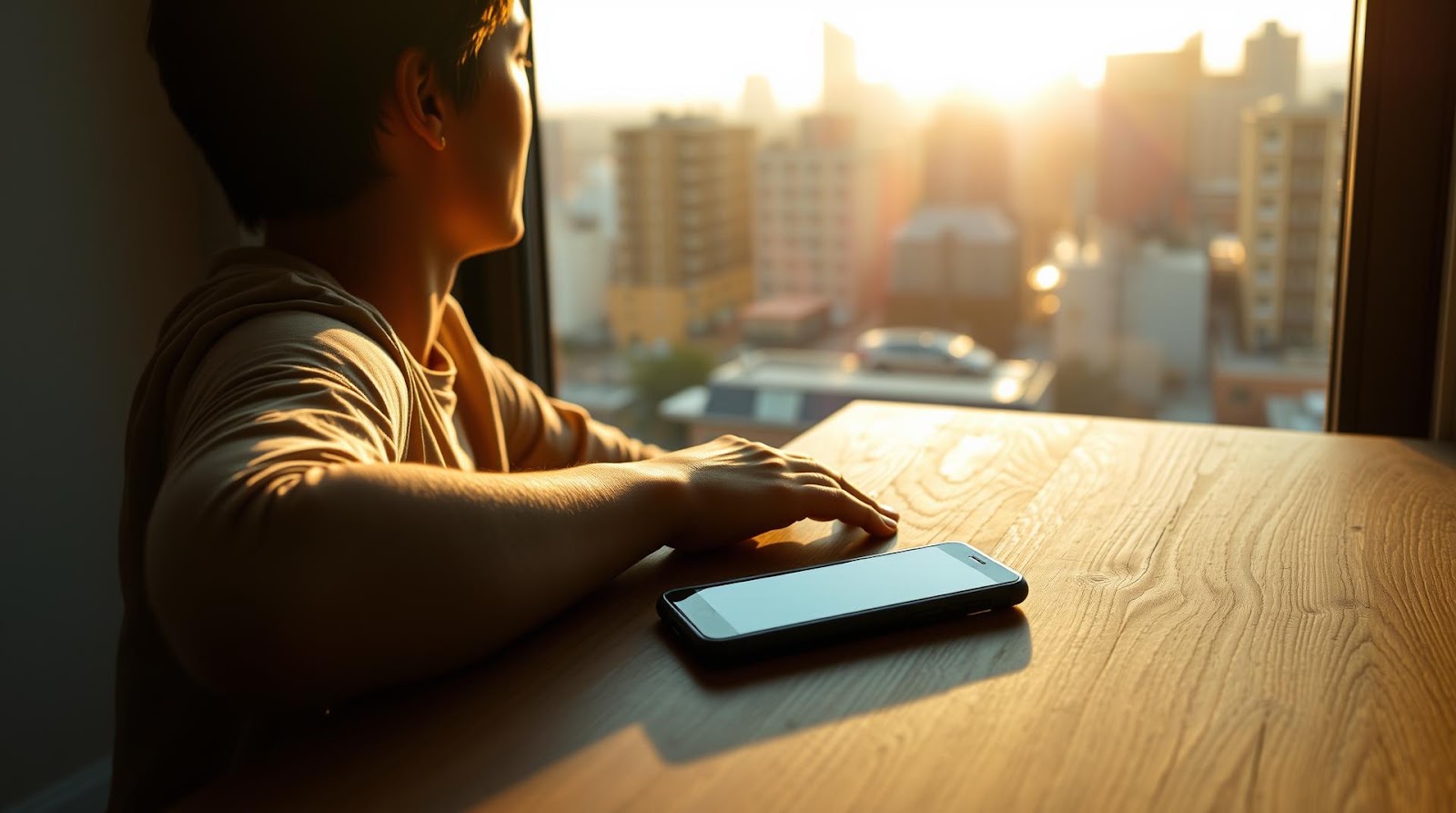
Last Tuesday, I opened Instagram at 9:47 AM to check a message from my broker about a stock update. I looked up at 12:53 PM. Three hours. Gone. Evaporated like morning chai on a Mumbai rooftop.
I wasn't scrolling mindlessly either — I was *engaged*. Liked a few posts, watched three Reels about productivity (the irony isn't lost on me), read a 2000-word thread on inflation, scrolled through someone's vacation pics to Goa, got angry at a political post, laughed at a meme, checked my portfolio on Zerodha, then back to Instagram. It felt productive. It felt necessary. It felt like nothing.
And I know I'm not alone. If you're reading this, you've probably done the same thing. Maybe today. Maybe right now, between checking notifications.
Here's the thing — doom scrolling isn't laziness. It's not a character flaw. It's engineered. These apps employ thousands of people whose literal job is to keep your thumb moving. And we're losing. Not just time. We're losing focus, sleep, money, and honestly? Pieces of our sanity.
I decided to take this seriously. Not in a preachy "delete your phone" way, but in a practical, data-driven way. Because I'm a data analyst — I track things. And what I found was actually surprising.
The Math Behind Why Your Brain Can't Resist
Let me start with the uncomfortable truth: your phone is literally designed to hijack your dopamine system.
When you get a notification, your brain releases dopamine *before* you check it. The anticipation itself is the drug. Then you open the app, get a little hit, close it, and five minutes later? You're back. This cycle repeats about 90 times a day for most of us.
I tracked my phone pickups for a week using the built-in Screen Time on my iPhone. Average: 87 times per day. That's once every 11 minutes, even during sleep hours (I apparently check my phone at 3 AM sometimes, which is... a lot to process).
And here's what actually shocked me — I wasn't even aware of 60% of those pickups. They were automatic. Like breathing. Like scratching an itch.
Why algorithms are basically slot machines
Instagram, YouTube, Twitter, even your email — they all use the same principle as a slot machine. You pull the handle (scroll), you get a random reward (good content, bad content, who knows?), and your brain gets confused about what's valuable. So you keep pulling.
The feed is infinitely long. There's always one more post. One more video. One more notification. This is called "variable ratio reinforcement" and it's the most addictive reward schedule known to psychology.
Apps like CRED literally gamify bill payments with scratch cards. PhonePe shows you cashback notifications. YouTube's algorithm learns exactly what thumbnail style makes you tap fastest. They're not trying to waste your time maliciously — they're trying to maximize engagement. And you're the product being optimized.
The opportunity cost nobody talks about
Let me do some quick math. If you doom scroll for just one hour per day (most people do more), that's 365 hours per year. That's roughly 15 full days. In a 40-year career, that's more than a year of your professional life. Just scrolling.
Forget the philosophical stuff about "being present." Let's talk rupees. If you earn ₹50 lakhs per year, and you're losing an hour daily to scrolling, you're literally burning ₹2,400 per day in productivity-adjusted income. That's ₹8,76,000 per year.
Or think of it differently. That one hour could have been used to learn a new skill, build a side project, network, read, or just sleep better. Which would compound into something meaningful.
What Actually Works (Not the Instagram Advice)
Now, here's where most people go wrong. They read an article saying "delete social media" or "use grayscale mode" and feel motivated for two days, then snap back.
I tried that. Didn't work. So I got granular.
The friction strategy
Instead of deleting apps (which is unsustainable for most of us who actually need them for work or staying in touch), I added friction.
First: I logged out of Instagram, Twitter, and YouTube on my phone. Not deleted. Just logged out. Now opening the app means I have to enter my password. That 10-second pause is enough to make my brain ask "do I actually need this right now?" Usually the answer is no.
Second: I turned off all notifications except for messages and calls. All of them. LinkedIn, Instagram, news apps, email, everything. You'd think this would make you miss important stuff, but here's the thing — important notifications find you. If your boss needs you, they'll call or text. If your stocks crash, you can check during lunch. The algorithm won't let the important stuff disappear.
Third: I moved social apps to a folder on the last home screen page. Not deleted. Just one extra tap away. Your brain likes the path of least resistance. Making it slightly less convenient actually works.
The replacement habit
This was bigger than I expected. When you remove doom scrolling, you create a vacuum. And humans hate vacuums — we fill them with something.
I replaced my scrolling time with:
- Audio: Podcasts during my commute instead of mindless Reels. I started following podcasts like The Tim Ferriss Show and some Indian ones like The Ranveer Show. (Yes, I know, but bear with me.) The point is my brain is learning something instead of getting overstimulated.
- Reading: I set a goal of 30 minutes of reading before bed instead of phone time. Sounds boring, but it's actually a game-changer for sleep. I use the Kindle app, so it's still on my phone, but there's no algorithmic nudge to keep reading "just one more post."
- Movement: When I feel the urge to scroll, I do 10 push-ups or go for a 5-minute walk. Weird, but it redirects the dopamine craving into something that actually makes me feel good. Not the fake Instagram-good. Real good.
The time audit that changed my perspective
I started tracking what I actually needed my phone for versus what was just habit. Turns out I needed it for:
- Checking email (maybe 5 times a day, genuinely)
- Banking apps and Zerodha for investments
- Messages from friends and family
- Navigation and UPI payments
- Actually calling people
That's it. Everything else was optional. So I gave myself explicit permission to use my phone *only* for these things before 7 PM. After 7 PM? Nothing. Phone goes in another room.
The first week was painful. By week three, it felt normal. By week four, I genuinely didn't feel the urge anymore.
| Strategy | Effort Level | Effectiveness | Sustainability |
|---|---|---|---|
| Delete apps entirely | Low effort | Very high (first month) | Low (triggers reinstall) |
| Grayscale mode | Low effort | Medium (adapts in 2 weeks) | Low |
| Logout + turn off notifications | Low effort | High | High |
| Replace habit + time blocking | High effort | Very high | Very high |
| Phone-free hours (like 7 PM) | Medium effort | High | High (if you're consistent) |
What Changed In My Life (Real Results)
And honestly? This is where it gets real.
After three months of this, here's what I measured:
- Focus: I can now write for 90 minutes straight without my brain screaming for a break. Before this? 12 minutes max. That's not metaphorical — that's tracked via actual work output.
- Sleep: I wake up more refreshed. No more 3 AM phone checks. No more blue light messing with my melatonin. I'm sleeping 45 minutes more per night on average.
- Anxiety: This one surprised me. Doom scrolling creates low-grade anxiety because your brain is constantly processing new information. Without it, I feel... calmer. The news will exist tomorrow.
- Relationships: I'm actually present when hanging out with friends. Not physically present but phone-in-hand present. When I'm with someone, I'm actually there. People notice. It's nice.
- Money: Fewer impulse purchases. When you're not constantly exposed to ads, you don't buy as much stuff you don't need. I probably saved ₹8,000-10,000 per month just by not seeing targeted Instagram ads.
- Income: I wrote three blog posts that I wouldn't have written before. One of them got decent traction. Could lead to opportunities. Hard to quantify, but it's real.
But let me be honest too — I still scroll. Maybe 20-30 minutes per day if I average it out. I'm not a robot. But it's intentional. It's during specific times. It's not stealing my hours without me noticing.
How to Actually Start (Not Tomorrow, Today)
If you're reading this and thinking "okay Dattatray, but I don't know where to start," here's your actual first step. Not a big dramatic gesture. Just one thing.
Today, right now: Turn off notifications for one app. Just one. The one that drains you the most. Don't delete it. Don't log out. Just turn off notifications.
Do that for one week. See how it feels.
Next week: Log out of that app on your phone. Keep the app, just log out.
Week three: Move that app to a folder or last home screen.
Week four: Pick a replacement habit. One thing you'll do instead of scrolling. Even if it's just sitting quietly with a cup of coffee.
This isn't willpower. This isn't motivation. This is just friction. Small, consistent, tiny friction that compounds.
And if you slip? If you download the app again or get pulled back? That's fine. You're not failing. You're just noticing where your willpower is weakest. Then you add more friction to that specific spot.
Final Thoughts
Look, I'm not saying social media is evil. It's not. It's a tool. And like most tools, it can build something or destroy something depending on how you use it.
The problem isn't that these apps exist. The problem is that they're designed to be used *not* intentionally. They're designed to pull you in. And if you're not actively fighting back with small, practical strategies, you're going to lose hours that you'll never get back.
I lost three hours last Tuesday. I can never have those back. But I learned something from it, and now I'm losing maybe 20 minutes a week instead of 20 hours. That's time I can use to build something, learn something, or just be present with people I care about.
You can do the same. Not perfectly. Just intentionally.
Start today. One notification. That's it.
And hey, if you want to share how it goes, drop me a message or leave a comment. I'd actually like to know. Genuinely.
— Dattatray
Written by Dattatray Dagale • 21 May 2026


.png)
.png)


0 Comments