Dear younger me,
Remember that afternoon in 2019 when you got your first credit card from HDFC Bank? You were sitting in the office pantry in Kalyan, excited that you'd finally entered the "real world" of finance. You had no idea what a credit score was. Honestly, you didn't care.
For three years, you swiped that card without thinking. Paid your bills whenever you felt like it. Sometimes on time, sometimes two weeks late. You thought it didn't matter — it was just money moving around in your account. Nobody was keeping score, right?
Wrong.
Last year, when you applied for a home loan (yes, that dream you talked about constantly), the bank pulled up your credit report. Your score was 687. Not terrible. But not good either. The loan officer's face told you everything. Slightly lower interest rate eligibility. Higher down payment expectations. Unnecessary friction where there shouldn't have been any.
That's when it hit me. A credit score isn't some abstract number that bankers care about. It's the financial equivalent of your reputation. And just like reputation, once damaged, it takes time to rebuild.
I want to tell you what I've learned since then — because I know you're probably where I was three years ago. Maybe you're doing okay with money but have no clue how credit scoring works. Maybe you think it's not relevant yet. Maybe you've heard horror stories and assumed it's too complicated.
Let me break this down the way I wish someone had explained it to me.
What Actually Is a Credit Score (and Why It Matters More Than You Think)
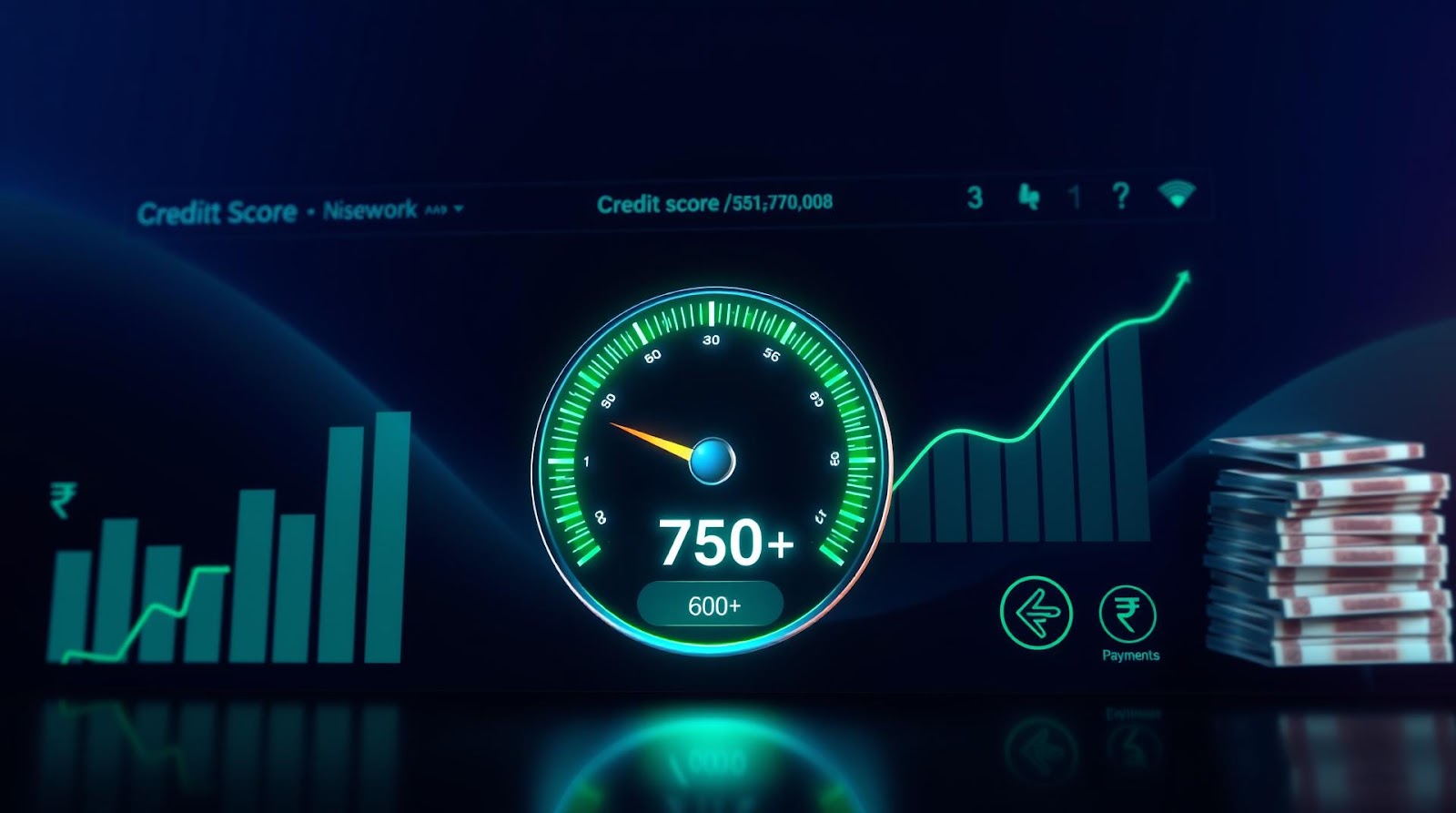
Let's start with the brutal truth: your credit score is a three-digit number between 300 and 900 that tells lenders how trustworthy you are with borrowed money.
That's it. That's the whole thing.
In India, there are four major credit bureaus that calculate this: CIBIL (Credit Information Bureau India Limited), Equifax, Experian, and CRIF HighMark. CIBIL is the oldest and most widely used, so that's the one you'll hear about most often.
Here's what most people get wrong: they think a credit score only matters if you're planning to take a loan. False. It affects:
- Loan approvals — home loans, personal loans, auto loans. Banks literally decide whether you deserve money based on this number.
- Interest rates — a score of 750+ can save you ₹2-3 lakhs on a ₹25 lakh home loan. That's not nothing.
- Credit card applications — higher scores get you better cards with better rewards and higher limits.
- Even job applications — some employers (especially in finance) check credit scores. I know this because we do background checks at Morningstar.
- Insurance premiums — yes, insurance companies check this too.
And honestly? The sooner you build a good score, the more compounding benefit you get over decades. But I'm getting ahead of myself.
The Five Things That Actually Determine Your Score
Your credit score isn't magic. It's calculated from five main factors (though their exact weightage is a bit secretive). Here's what matters and roughly how much:
| Factor | What It Means | Rough Weight |
|---|---|---|
| Payment History | Did you pay your bills on time? | 35% |
| Credit Utilisation | How much of your credit limit are you using? | 30% |
| Credit Mix | Do you have different types of credit (cards, loans, etc.)? | 15% |
| Credit Age | How long have you had credit accounts open? | 10% |
| Enquiries & Defaults | How many times did you apply for new credit? Any defaults? | 10% |
Notice that payment history is 35%? That's the heavyweight. It's literally more than a third of your score. This was my biggest mistake. I thought as long as I paid eventually, it didn't matter when.
It matters.
Why People Mess This Up (Including Me)
The thing about credit scores is that they're invisible until you need them. You can ignore them for years. Your credit card still works. Your bank doesn't call you. Everything feels fine.
Then you apply for something important and suddenly the number matters hugely.
The worst part? The damage compounds. A late payment doesn't just hit your score once. It stays on your credit report for up to 7 years. Even one 60-day late payment in your 20s can haunt you when you're applying for a home loan at 30.
And here's something I learned at Morningstar that shocked me: most Indians in the 22-35 age group have no idea what their score even is. We've done analysis on financial behaviour, and the pattern is clear — young professionals check their stock portfolios obsessively but have never checked their credit score.
That's backwards.
How to Improve Your Credit Score (The Unglamorous Reality)
Now for the part everyone wants: how to actually fix it. Here's what I've done over the past year that moved my score from 687 to 756.
1. Pay Every Single Bill On Time. No Exceptions.
This sounds obvious, but it's the difference between a good score and a bad one.
"On time" doesn't mean whenever you have money. It means by the due date. Every single time. No excuses. No "I'll pay it next week."
Here's my system: I set up auto-pay for my credit card bill on the 10th of every month (my due date is the 12th). I do the same for my loan EMI. I have a separate calendar notification on my phone.
This single change did more for my score than anything else. In the first month alone, it went up 15 points just from one on-time payment after months of being late.
The apps that help: CRED (which gamifies credit card payments and rewards you for paying early), PhonePe, Google Pay — basically any app that lets you set up automatic payments.
2. Lower Your Credit Utilisation Ratio
This one surprised me because I used to think as long as I paid my card bill, using the full limit was fine.
Nope.
Credit bureaus look at how much of your available credit you're actually using. If you have a ₹1 lakh limit and you're using ₹80,000 every month (even if you pay it off), that's 80% utilisation. Lenders see that as risky behaviour.
The sweet spot? Under 30% utilisation. Ideally under 10%.
So if your limit is ₹1 lakh, try to keep your monthly spending on that card under ₹10,000 if possible. Or request a higher limit (this doesn't hurt your score if done sensibly).
I did both. I requested my limit be increased from ₹2 lakhs to ₹4 lakhs, and I started keeping my monthly utilisation under 20%. My score jumped another 20 points in two months.
The counterintuitive part: not using your credit card at all is also bad. You need to use it regularly to show you can handle credit responsibly. Just don't use too much.
3. Don't Close Old Credit Accounts
This is where my bank manager gave me advice that almost tanked my score.
My first ICICI credit card had a ₹50,000 limit. After getting a better card from HDFC, I wanted to close it because "why have two cards?"
The bank manager said it would hurt my score slightly. I didn't listen and closed it anyway.
Mistake. My score dipped 8 points. Here's why: credit age matters. The longer your credit history, the better. Closing an old account reduces your average account age and makes you look like you have less credit experience.
Now I keep that ICICI card open, use it for one small transaction every few months (Netflix subscription), and pay it off immediately. It costs me nothing and helps my score.
4. Build a Healthy Credit Mix
Credit bureaus love seeing that you can handle different types of credit: credit cards, personal loans, home loans, auto loans.
This doesn't mean you should take unnecessary loans. But if you already have a credit card and can responsibly take a small personal loan or participate in a buy-now-pay-later plan (like Bajaj Finserv), that shows you can manage multiple types of credit.
I'm not saying go borrow money just for a score boost. That's stupid. But when I took a small ₹50,000 personal loan from my bank at a 12% interest rate (to fund a course), it actually helped my score because it added a different credit type to my profile.
5. Check Your Credit Report for Errors
This one saved me 5 points and a lot of stress.
I downloaded my CIBIL report from the official website (cibil.com) and found that a credit card I'd closed years ago was still showing as active on my report.
I filed a dispute, sent documentation, and within 30 days it was corrected. My score went up slightly.
Check your report annually. Look for:
- Accounts you don't recognise (identity theft)
- Incorrect payment statuses (they might have marked you late when you actually paid on time)
- Duplicate accounts or old closed accounts still showing as active
- Wrong personal information
All four bureaus offer free annual reports. Use them. There's no cost.
The Timeline — How Long This Actually Takes
Here's what nobody tells you: improving your credit score takes time. You can't hack it.
A single on-time payment might improve your score by 5-10 points. But building a score from 600 to 750+ takes 12-18 months of consistent behaviour.
My personal journey:
- Month 1-3: Set up auto-pay. Score went from 687 to 702. Nothing dramatic, but moving in the right direction.
- Month 4-6: Reduced credit utilisation. Score went to 720. Started feeling the momentum.
- Month 7-9: Took a personal loan (intentionally, for a course). Diversified credit. Score went to 738.
- Month 10-12: Cleaned up credit report. Kept everything consistent. Score stabilised at 756.
I'm still working on getting it to 800+. It's possible, but it requires that I never mess up again. One late payment now would be a huge setback.
What to Actually Track and How Often
You don't need to obsess over your score daily. But you should check it:
- Every 3 months: See if your changes are working
- Every 6 months: Download your full credit report and look for errors
- Before applying for any major loan: Get a baseline so you know what to expect
Apps that help: CIBIL's own app (for free monthly checks), BharatCredit (shows your score for free), and even some fintech apps like Groww and Zerodha have credit score features.
Bookmark this: www.cibil.com for your official free annual report.
My Perspective
Here's what I've realised working in data at Morningstar: credit scores are one of the most underutilised financial tools for people in their 20s and 30s. We obsess over stock market returns, trying to beat Nifty indices by 2%, but we ignore the thing that could save us lakhs on a home loan.
The irony? Improving your credit score requires zero investment. It's literally just discipline. You're not buying anything. You're not taking risk. You're just paying bills on time and managing borrowed money responsibly.
And yet, most people in our age group ignore it completely. I used to be one of them.
The pattern I've seen in our data: those who build a 750+ score in their late 20s are significantly ahead financially by their mid-30s. Not because they're smarter. But because they have access to better rates, better cards, and better loan terms. That compounding advantage is real.
What surprised me most? That my bank manager never explained this to me. Nobody did. I had to learn by making mistakes and then fixing them. If I could go back and tell my 25-year-old self one thing, it would be: "Your credit score is your financial character. Treat it like your reputation. Because it literally is your reputation with lenders."
Final Thoughts
You don't need a perfect score to be financially healthy. A score of 750+ is genuinely great and opens most doors. Above 800 is showing off, and honestly? The marginal benefit drops significantly.
What matters is that you start. Check your current score today. Seriously, do it right now. Open cibil.com, register, download your report. It takes 10 minutes.
Then commit to these three things:
- Every bill paid on time, every single time
- Credit utilisation under 30%
- Check your report once a year for errors
That's it. Do those three things for 12 months, and your score will improve. Probably significantly.
The commute from Kalyan to Mumbai gives me a lot of time to think. And one thing I've realised is that personal finance isn't complicated. It's just boring. Building wealth is boring. Paying bills on time is boring. Not spending money you don't have is boring.
That's exactly why most people don't do it. Because the exciting stuff — trying to time the market, chasing returns, finding shortcuts — actually works against you.
Your credit score improving from 700 to 750 won't be a thrilling moment. You won't post it on Instagram. Your friends won't congratulate you.
But when you apply for that home loan at 30 and get approved with a 7.2% rate instead of 8.5%, you'll remember this. And you'll be grateful that you started early.
You've got this. Start today.
Yours,
Dattatray
Dattatray Dagale
Data Analyst • Blogger • Mumbai
I'm a data analyst from Kalyan, Maharashtra, working at Morningstar. I write about personal finance, career growth, and everyday life for Indian millennials — the stuff I wish someone had told me earlier.
Written by Dattatray Dagale • 29 June 2026



.png)
.png)


0 Comments