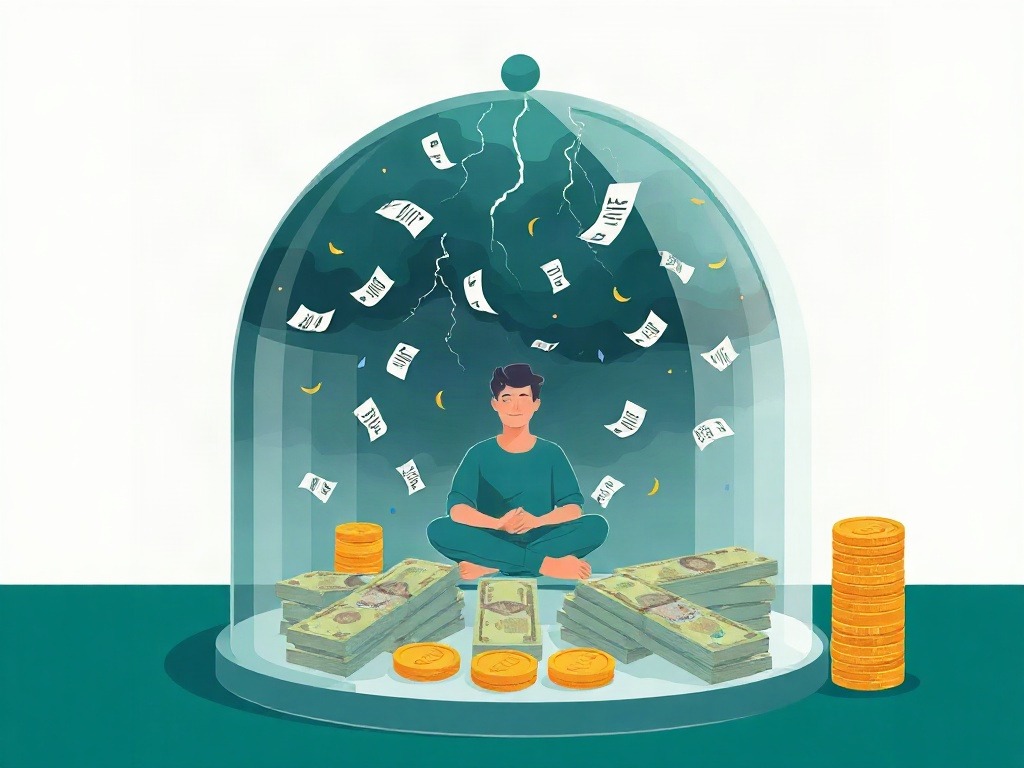
I didn't have an emergency fund until I was 26.
That's not a humble brag or a setup for some inspiring turnaround story. It's just fact. I graduated with an economics degree, landed a decent job at Morningstar, and convinced myself that my salary was enough. I'd spend most of it, save a little in a fixed deposit, and thought I was sorted. The safety net? I assumed it would be my parents or maybe a personal loan if things got really bad.
Then my car broke down on the Sion-Panvel highway at 7 PM. The mechanic quoted ₹47,000 for transmission repairs. My fixed deposit was locked. My salary wouldn't come for 10 days. My parents were visiting relatives in Nashik. I borrowed ₹50,000 from my colleague, felt embarrassed for three months, and learned an expensive lesson.
That's when I stopped treating emergency funds like a nice-to-have and started treating them like oxygen.
Here's what I want to tell you straight up: if you're between 22 and 35, working in India, and you don't have an emergency fund, you're not being bold or optimistic. You're being reckless. And I say this with genuine care, not judgment.
Why Emergency Funds Matter More Than You Think
The Math Never Lies (But We Ignore It)
Let me walk you through what happened to my friend Priya last year. She's a content strategist, earns around ₹85,000 a month, lives in Powai, and had zero emergency savings. One morning, her dad had a mild stroke. Not critical, but he needed immediate hospitalization, MRI scans, consultation with a neurologist.
Total out-of-pocket expenses: ₹3,20,000 across two months.
She exhausted her credit card limit (₹2 lakhs), borrowed ₹80,000 from her brother, and spent the next nine months paying it back with interest and guilt. Her father recovered fully, which is what matters most. But here's the thing — she could have handled the same situation with zero stress if she'd simply had ₹5 lakhs sitting in a high-yield savings account.
And honestly? Medical emergencies aren't even the scariest part. What terrifies me is job loss. I've seen three rounds of restructuring at Morningstar. Each time, talented people got laid off with severance that rarely lasted more than two months. If you're the only earner in your family (which many of us are), one job loss without an emergency fund becomes a genuine crisis.
You're One Unexpected Event Away From Bad Decisions
Here's what nobody talks about: when you're desperate, you make terrible financial choices. You take personal loans at 18% interest. You raid your investment portfolio early and lose compound growth. You sell your insurance policy. You borrow from NBFCs at predatory rates (I've seen ads for loans at 36% APR on Instagram—no thank you).
An emergency fund isn't just about money. It's about keeping your decision-making brain intact when everything feels like it's falling apart.
| Crisis Type | Typical Cost (INR) | Timeline | Without Emergency Fund |
|---|---|---|---|
| Car/Bike repair | ₹30,000–₹80,000 | 1–2 weeks | Loan or delay work |
| Medical (non-critical) | ₹50,000–₹2,00,000 | 1–3 months | Credit card debt or family conflict |
| Job loss | Living expenses for 3–6 months | 2–6 months | Forced to take lower salary or borrow heavily |
| Urgent home repair | ₹40,000–₹3,00,000 | 1–4 weeks | Personal loan or damage worsens |
| Family emergency travel | ₹15,000–₹1,00,000 | 1–2 days | High-interest flight on credit card |
How Much Should You Actually Save?
The 3-6 Month Rule (And Why It's Not One-Size-Fits-All)
I used to think the emergency fund formula was simple: save 3 to 6 months of expenses, done. But that advice ignores your actual life.
If you're in a stable corporate job with health insurance, work for a large company (less likely to fold overnight), and have a working spouse or family backup—3 months might be enough. That's roughly ₹2,00,000 to ₹3,00,000 for someone earning ₹70,000 per month in Mumbai.
But if you're a freelancer, contract worker, or sole earner in your family? You need 6 months minimum. Maybe even 9. I know a friend who's a wedding planner—her income is seasonal and unpredictable. She keeps ₹10 lakhs in her emergency fund, and it's the best decision she's made.
And here's something I'm still figuring out: what counts as "expenses"? I used to count my monthly spending (₹55,000 including rent, food, transport, subscriptions). But that was wrong. Your emergency expenses are lower. You won't buy new clothes. You won't travel. You won't eat out. So calculate your bare minimum—rent, food, medicine, transport only. For me, that's ₹32,000.
So my emergency fund target? ₹1,92,000 (6 months × ₹32,000). I'm at ₹2,10,000 as of last month.
Where to Keep It (And Why Your Current Approach Is Probably Costing You)
This is where people get confused. Your emergency fund should NOT be in your investment portfolio. No equity mutual funds. No stocks. No Zerodha holdings. Those are growth vehicles, not safety nets.
Your emergency fund should be: accessible instantly, safe, and earning decent interest.
Here's what I recommend based on what actually works in India:
Option 1: High-Yield Savings Account (Best for most people)
Banks like ICICI, HDFC, and Axis now offer savings accounts with 4–7% interest if you maintain a minimum balance. I keep ₹1,80,000 in an ICICI Bollywood Savings Account (yes, that's a real product name, and yes, it earns 6.5% interest). It's in my account within hours if I need it.
Option 2: Liquid Mutual Funds
If you already have some surplus and want marginally better returns, liquid funds (managed through Groww or Zerodha) earn 5–6.5% and give you money within 24 hours. I'm experimenting with ₹30,000 here, but it's not my primary emergency fund.
Option 3: Fixed Deposit (My old, dumb approach)
Don't do this for your emergency fund. You'll face penalties for early withdrawal, and it defeats the purpose. FDs are for money you don't need for 6 months or more.
I used to think: "But Dattatray, if my emergency fund is earning interest, won't I be tempted to keep adding to it instead of investing?" Fair point. But here's my perspective—if you don't have a ₹2 lakh safety net, you have no business investing aggressively anyway. Get the emergency fund first. Invest later.
Building It When You're Broke (Because Most of Us Are)
The 3-Step Approach That Actually Works
Let's be real: if you're earning ₹50,000 a month in Mumbai, getting to ₹2,00,000 feels impossible. So let's break it down into smaller targets.
Step 1: Get to ₹30,000 (The First Cushion)
This is your absolute minimum. You can do this in two months if you cut discretionary spending. No eating out for 8 weeks. No new subscriptions. No shopping. That alone saves most people ₹10,000–₹15,000 monthly.
Open a high-yield savings account (ICICI, HDFC, or Axis) and transfer ₹15,000 today. Then add ₹7,500 weekly from your next two salaries. Boom. You have ₹30,000. You're no longer completely exposed.
Step 2: Expand to ₹1,00,000 (The Real Safety Net)
This takes time—maybe 6 months. But it's the number that actually matters. With ₹1 lakh, you can handle most car repairs, minor medical emergencies, or a month without income.
The trick? Automate it. I transfer ₹8,000 to my emergency fund account on the 1st of every month (right after salary), before I can spend it. I don't see it. I don't think about it. It just happens. Set this up in your bank app—most banks have automated transfer features.
Step 3: Reach Your Full Target (₹1,80,000–₹3,00,000)
Once you hit ₹1,00,000, you've won the psychological battle. Now it's just grinding. Keep that ₹8,000 monthly contribution. Add bonuses and tax refunds to the fund (don't spend them). In 18 months, you'll be at ₹2,44,000.
The Mistakes I See People Make
One: Mixing their emergency fund with their "future travel fund." If you dip into it for your Bali trip, it's not an emergency fund anymore—it's just savings. Discipline matters.
Two: Keeping it in the same account as their salary. It's too tempting to use it. I literally opened a separate bank account at a different bank to avoid this. My salary goes to ICICI, my emergency fund lives in HDFC. Sounds excessive, but it works.
Three: Forgetting to increase it as their salary grows. You got a ₹10,000 raise? That's nice. But half of it should go to your emergency fund until you hit your target. Only then can you celebrate with that new phone.
My Perspective
I had a conversation with my colleague Karan six months ago that changed how I think about emergency funds. He's 29, earns well (around ₹1,20,000 monthly), and has zero emergency savings. "Bro, I have CRED limit of ₹3 lakhs," he said. "I don't need an emergency fund. I'll just use my credit card."
I didn't argue. But six weeks later, his mother had an emergency surgery. He used his credit card for the hospital, then paid off the balance through EMIs at 14% interest. He told me later, "I probably paid ₹25,000 extra in interest that I didn't need to pay." That's the cost of being cocky about risk.
What surprised me: even after that, he didn't build an emergency fund. He said he'd "start next month." He hasn't. This tells me that having an emergency fund isn't just about having money—it's about believing you deserve protection. And many of us, especially in our 20s, don't feel like we deserve it. We feel like we're supposed to be invincible.
I used to be the same. I'd see news of people losing jobs and think, "That won't happen to me. I'm good at my work." Spoiler alert: talent doesn't prevent recessions. It doesn't stop hospitals from overcharging. It doesn't prevent car transmissions from failing on highways.
Getting an emergency fund wasn't about becoming paranoid. It was about admitting that I'm not in control of everything—and that's okay.
Final Thoughts
If you're reading this and you don't have an emergency fund, I want you to do one thing today: open a high-yield savings account. Not tomorrow. Not next week. Today. It takes 10 minutes on your phone.
Then transfer ₹1,000 to it. Just ₹1,000. It won't change your life, but it changes your mindset from "I'll start saving" to "I am saving."
The emergency fund isn't sexy. It doesn't compound like stocks. It won't make you rich. But it will prevent you from being poor when life throws something unexpected at you. And in my experience, life throws unexpected things constantly.
You've already worked hard to earn that money. Don't let one accident, one illness, or one job loss undo months of progress. Build that safety net. Your future self—the one sitting in a car waiting for a mechanic, or in a hospital waiting room, or refreshing LinkedIn after getting laid off—will thank you.
Dattatray Dagale
Data Analyst • Blogger • Mumbai
I'm a data analyst from Kalyan, Maharashtra, working at Morningstar. I write about personal finance, career growth, and everyday life for Indian millennials — the stuff I wish someone had told me earlier.
Written by Dattatray Dagale • 25 August 2026



.png)
.gif)


0 Comments