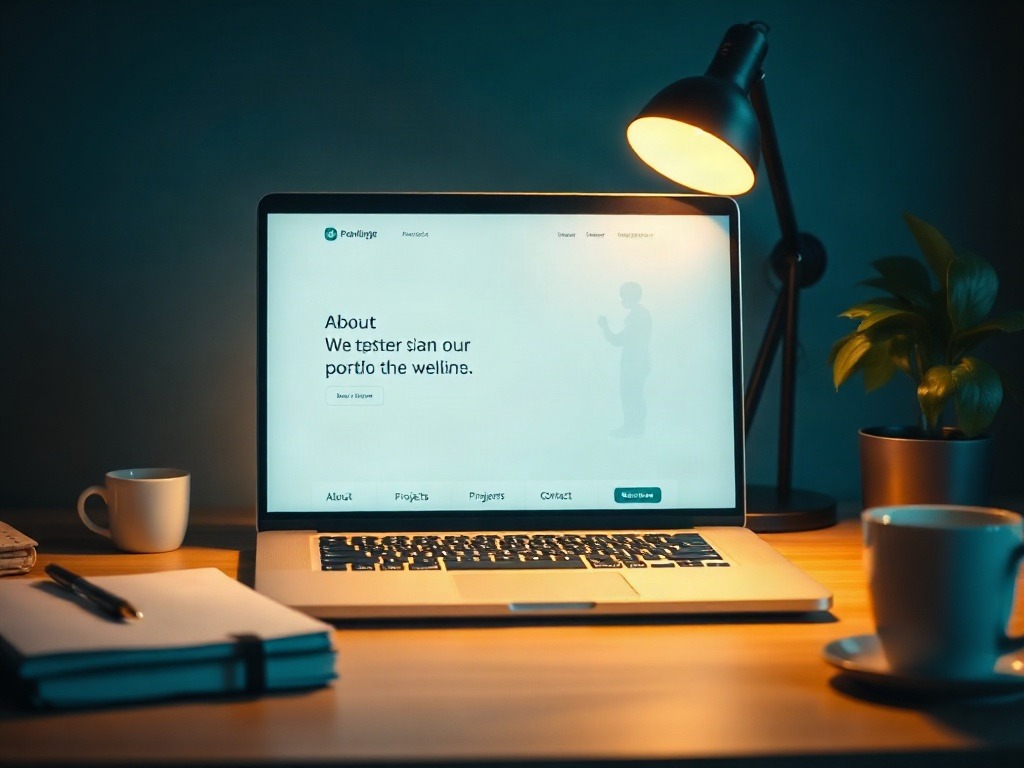
Two years ago, I built a portfolio website and immediately forgot about it.
Not metaphorically. Literally forgot. It was sitting on a free Wix subdomain, collecting dust, with outdated projects and a bio that said I was "passionate about data" (cringe, I know). I'd spent a weekend setting it up, felt productive, and moved on. Meanwhile, every recruiter I met at networking events would ask, "Do you have a portfolio?" and I'd mumble something about being "between websites."
The embarrassing part? I work at Morningstar. I analyze investment portfolios for a living. Yet I couldn't manage my own online presence.
This post isn't a how-to guide that pretends I figured everything out in one sitting. It's what I actually learned after building three different portfolio websites, deleting two of them, and finally creating one that doesn't make me cringe when I share it on LinkedIn.
Here's what went wrong, what stuck, and why this matters for anyone trying to stand out in their career without spending a rupee.
The First Mistake — Overthinking Before Building Anything
My first portfolio website never actually went live.
I spent three months researching. Seriously. I read articles about web design principles, watched YouTube videos about UI/UX, compared Wix vs. Squarespace vs. WordPress like I was buying a Bajaj Finserv personal loan. I had spreadsheets. Actual spreadsheets. With feature comparisons rated on a scale of 1–10.
The problem? Every platform had trade-offs. Wix was easy but felt generic. WordPress gave me control but required hosting (which costs ₹200–500/month). Squarespace looked nice but seemed overkill for a data analyst from Kalyan. I'd find one issue with each platform and abandon it.
Meanwhile, friends who "weren't tech people" had built portfolios in a weekend using templates and were actually getting noticed.
Why Perfectionism is a Career Killer
Here's what I got wrong: I thought the website had to be perfect before anyone saw it. Perfect design. Perfect projects. Perfect copy. Turns out, most people don't care. They care that you exist, that your work is visible, and that they can reach you. That's it.
A mediocre portfolio that's actually live beats a perfect one that only exists in your head. Full stop.
The Real Cost of Delay
While I was researching platforms, someone else was already building theirs. And getting interviews. And building projects specifically for their portfolio. I wasn't behind because I chose the wrong platform—I was behind because I chose nothing.
This one hit me hard when a colleague mentioned a freelance data visualization project she'd taken up. "It'll look good on the portfolio," she said casually. At that moment, I didn't even have a portfolio to put it on. That stung.
What I Actually Got Right (Eventually)
After the three-month research spiral, I finally just picked something. Wix. Took me a weekend. It wasn't beautiful, but it was done.
And once it was done, everything changed.
I started getting messages on LinkedIn. Not floods—maybe one every two weeks—but they were real. A recruiter checking if I was open to opportunities. A friend from college asking if I could help with a data project. Someone genuinely impressed by a case study I'd written about my journey from spreadsheets to proper analysis workflows.
Here's the insight I wish I'd had earlier: your portfolio isn't a destination. It's a living thing. You build it, launch it (imperfectly), and improve it over time.
Free Platforms That Actually Work
Let me be specific about what works for someone like us—data professionals, designers, analysts, writers on a budget.
Wix Free Plan: Still my baseline recommendation. Yes, there's a Wix watermark on the domain, but the templates are solid, and hosting is completely free. I spent ₹0. Literally zero rupees. The interface is drag-and-drop enough that you don't need to know code. Downside? Limited customization and Wix branding is visible.
GitHub Pages (for technical folks): This is where I moved after six months. If you're comfortable with Git and basic HTML/CSS, GitHub Pages is genuinely free. No watermarks. You get a professional domain (username.github.io). I host my current portfolio here. The barrier to entry is higher, but the payoff is worth it.
Notion (surprisingly good): I tested this for a friend, and honestly? Notion's free tier is underrated for portfolios. You can make it pretty, embed projects, link everything. It doesn't feel "official" compared to a proper website, but it works. And it's free.
Vercel + Next.js (if you're willing to learn): This is the "one more step" tier. Still free hosting, looks professional, but requires some coding knowledge. I'm not recommending this to everyone—only if you're in tech and want to flex a bit.
What Goes Into a Portfolio That Actually Gets Noticed
I used to think portfolios were about showing your best work. Turns out, they're about showing your thinking.
The projects that generated the most interest weren't my shiniest dashboards. They were case studies where I explained my process. Why did I choose Python over Excel? What did I learn about data quality halfway through? What would I do differently?
People connect with honesty, not perfection. So I started writing projects like I write these posts—raw, specific, with mistakes included.
One case study I wrote was literally titled "How I Built This Dashboard Wrong (And What I Learned)." It wasn't my best work technically. But it got shared more than anything else on my site. Because it felt real.
The Content Question — What Should Actually Be on There
Here's where most people get stuck: "What do I put on my portfolio if I don't have projects?"
And honestly? This question used to paralyze me too.
My second portfolio website died because I was waiting for "good enough" projects. I'd analyze datasets for fun, but I'd think, "This isn't real work, so it doesn't count." Meanwhile, I had plenty of material—I just wasn't seeing it.
Building a Portfolio Without "Official" Projects
You don't need to have worked at Amazon or Flipkart to have portfolio-worthy content. Here's what actually works:
Personal projects: Analysis of any dataset that interests you. I've seen portfolios featuring everything from IPL statistics to WhatsApp chat analysis. The dataset doesn't matter. The insight does. (And yes, WhatsApp analysis genuinely got someone a freelance gig.)
Coursework reframed: If you did a project for a course—even as an assignment—frame it as a case study. Explain what you learned. Show your code or methodology. Most people never look at their college assignments again, but they're actually solid portfolio pieces.
Data you already have: If you invest via Zerodha, that's data. If you track spending on CRED or PhonePe, that's data. I wrote a case study analyzing my own investment performance over 18 months. It was personal, specific, and it landed interest from people who thought, "Wait, I do this too—how did you organize it?"
Writing: Analysis, opinions, breakdowns. You don't need a fancy project to show your thinking. I've seen analysts get noticed with nothing but well-written analysis pieces on their portfolio. Turns out, communication matters as much as technical skill.
The Minimum Viable Portfolio
You don't need much. Seriously. Here's what I'd recommend starting with:
- A professional photo (literally just a clear headshot—you can use your phone)
- A short bio (150 words max—no corporate jargon)
- 3–5 projects or case studies with a brief explanation of what you did and what you learned
- A link to your LinkedIn and GitHub (if relevant)
- A way for people to contact you (email is fine)
That's it. That's a complete portfolio. Everything else is bonus.
My current portfolio has exactly this, plus a blog section. I added the blog because I already write—but if you don't, don't add one. Don't force features just because other portfolios have them.
| Element | Minimum Viable | Nice to Have | Don't Bother Unless You Love It |
|---|---|---|---|
| Bio/About | ✓ 150 words, professional headshot | Social links, testimonials | Entire life story, video intro |
| Projects | ✓ 3–5 with brief description | Code links, process documentation | 20+ projects, screenshot galleries |
| Contact | ✓ Email + LinkedIn | Contact form, GitHub | Phone number, office address |
| Blog | ✗ Skip if you don't write | ✓ 2–4 articles if you enjoy writing | Daily posts, dead blog with old content |
| Design | ✓ Clean template, readable fonts | Custom colors, animations | Parallax scrolling, auto-playing music |
Maintenance — Why Your Portfolio Dies (And How to Stop It)
My second portfolio website tanked because I abandoned it.
I launched it with enthusiasm. Added projects. Tweaked the design. Then, after three months, life happened. Work got busier. I forgot about it. The projects became outdated. The "Latest Project" dated from 2021. When someone actually visited, they'd see a graveyard.
That's worse than not having a portfolio at all. A dead portfolio signals that you don't care about your own visibility. It's a bad look.
The Realistic Maintenance Schedule
You don't need to update your portfolio every week. But you need a system so it doesn't die completely.
Here's what I do now: Every quarter (every three months), I spend one evening on my portfolio. I check if everything still works. I add one new project if I have it. I update my bio if anything's changed. That's it. Maybe two hours, four times a year.
Eight hours annually to maintain professional visibility. That's genuinely worth it.
I also set a calendar reminder. January 15, April 15, July 15, October 15. When the reminder pops up, I open my portfolio and do a quick audit. "Does this still represent my current work? Does it load fast? Are there any broken links?"
This simple system is why my portfolio doesn't feel like a museum of old work.
Keeping It Relevant Without Burning Out
The key insight: you don't need to be constantly adding new projects. You just need to keep existing ones fresh.
If you wrote a case study two years ago, revisit it. Add a note at the top: "Update (2024): Here's what I'd do differently." That shows growth and keeps the content current. Takes 30 minutes. Makes a huge difference.
Or add small updates to your bio. If you learned a new skill, mention it. If you changed roles, update it. These micro-updates take minutes but signal that you're active and growing.
My Perspective — What Changed and What I Got Wrong
Six months ago, I was having coffee with my friend Priya (also in analytics) and mentioned that I was thinking about redesigning my portfolio again. She looked at me with this exasperated expression and said, "Dattatray, you've redesigned it three times. Stop redesigning and start sharing it."
That hit different.
I realized I was still in the perfectionism trap, just at a different level. I wasn't overthinking the platform anymore—I was overthinking the design. Same poison, different bottle.
The honest admission: I used to think a portfolio was a "once you build it, you're done" thing. Like it was a personal website equivalent of buying a property. But it's actually more like maintaining a professional wardrobe—you wear what you have, refresh it as you go, and don't blow up your entire closet because one outfit feels dated.
What surprised me most? The people who reached out. They weren't impressed by fancy animations or beautiful design. They connected with specificity. One person messaged me because she saw I'd analyzed Nifty 50 performance during COVID and wrote honestly about what shocked me. We ended up collaborating on a freelance project.
That wouldn't have happened if my portfolio was still stuck in my head, waiting to be perfect.
Final Thoughts
Your portfolio doesn't need to be perfect. It needs to exist.
Start this week. Pick a platform—Wix, Notion, GitHub Pages, whatever—and commit to having something live by next weekend. Don't aim for excellence. Aim for done.
Put up your current projects (even if they're half-finished). Write your bio (even if it feels awkward). Add a photo (even if you haven't taken a proper one yet). Launch it.
Then, once it's live, you can improve it. Add better projects. Refine the design. Write case studies. But the momentum comes from having something out there, not from perfecting it in isolation.
I work with data every single day. And the most important lesson I've learned isn't about analysis techniques or statistical methods. It's that visibility matters. You can be brilliant and invisible, or you can be average and findable. Visibility wins.
A portfolio is your mechanism for visibility. Make one. Keep it simple. Launch it. Update it quarterly. Move forward.
The Mumbai crowd commuting with me on the Central Line doesn't need a perfect portfolio. They need one that exists and they can point people to. That's it. That's enough.
Dattatray Dagale
Data Analyst • Blogger • Mumbai
I'm a data analyst from Kalyan, Maharashtra, working at Morningstar. I write about personal finance, career growth, and everyday life for Indian millennials — the stuff I wish someone had told me earlier.
Written by Dattatray Dagale • 05 October 2026



.png)
.gif)


0 Comments