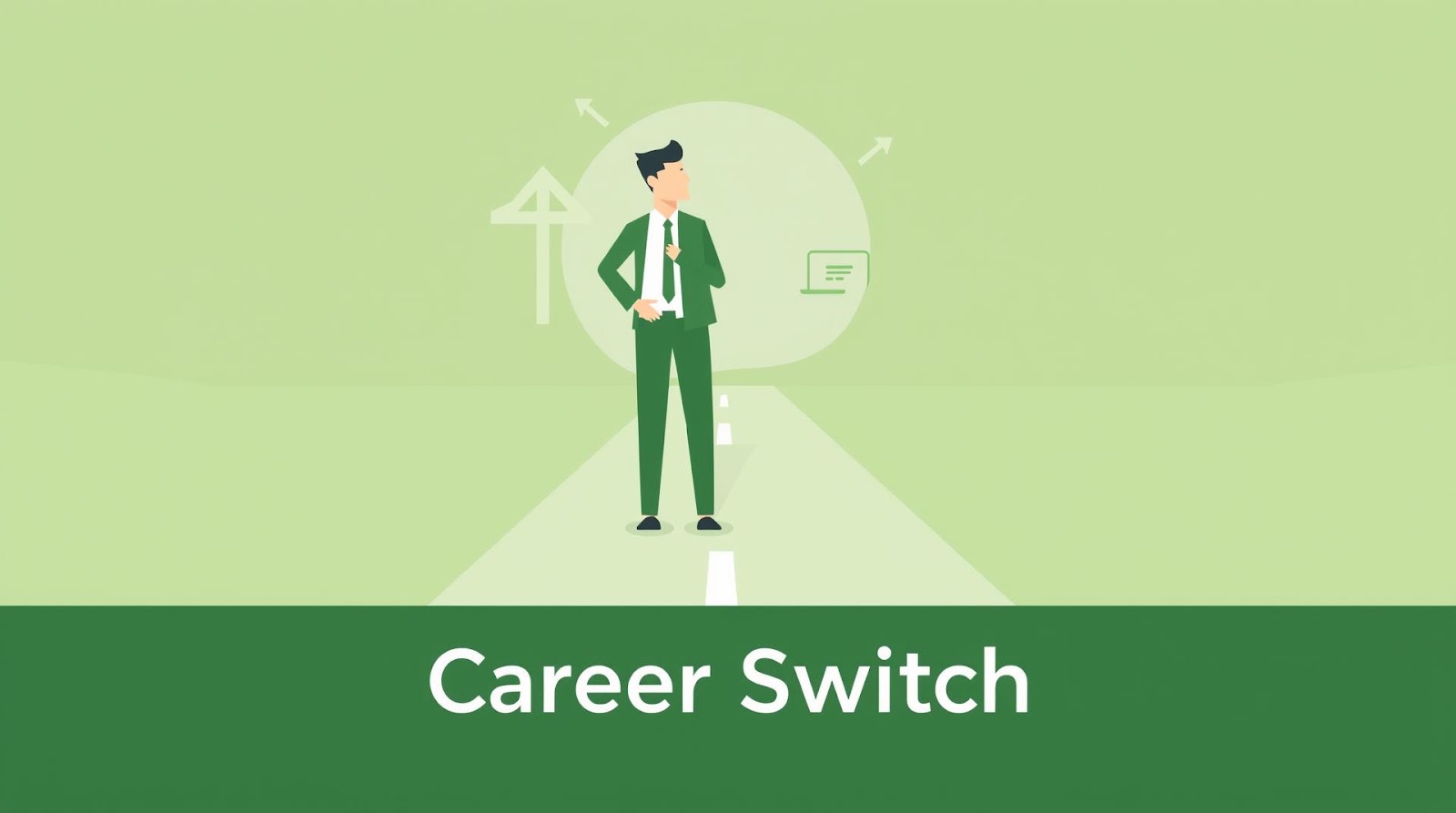
I was 27 when I realized I'd built a career I didn't actually want.
Not in a dramatic way. I wasn't miserable. My job at a fintech startup paid well — enough to save ₹40,000 a month comfortably, enough to invest in index funds through Zerodha, enough to feel like I was "winning" on the surface. But every Sunday evening, there was this low hum of dread. I wasn't doing work that mattered to me. I was optimizing for money and stability instead of growth and curiosity.
The thing about your late 20s is this: you're old enough to have real responsibilities, but young enough to still have runway. You're past the point of "figuring it out as you go," but you haven't calcified into your career yet. Most people don't realize this window exists.
So I switched. Not recklessly, but not cautiously either. And here's what I learned about doing it without sabotaging yourself financially or professionally.
The Money Conversation Nobody Has First
Let me be straight with you: switching careers in your late 20s is absolutely doable if you have a financial cushion. And if you don't have one? That's the actual problem to solve first, not after you've already quit.
Here's the real talk. When I decided to switch, my first move wasn't updating my LinkedIn. It was opening a spreadsheet.
Calculate Your Real Runway
Most people vastly underestimate what they actually spend monthly. You think it's ₹50,000, but it's really ₹75,000 once you account for everything. Use an app like CRED or PhonePe's analytics feature — they show you exactly where your money goes. Not approximately. Exactly.
Then ask yourself: if I had zero income for 6 months, would I be okay? Not "Would I die?" but "Would I be able to make the switch without panic-taking the first job offered?"
That's your real runway.
When I did this math, I realized I had about 8 months of comfortable savings. That meant I could afford to be selective. I wasn't forced to take the first offer. That freedom is worth more than it looks on a spreadsheet.
The Side Income Play (That Actually Works)
Here's the thing about switching careers in India: most people wait until they have nothing lined up. That's backwards. The smart play is to have a small side income stream 3-4 months before you make the jump.
This could be freelance writing, content strategy consulting, data analysis on Upwork, or even teaching a skill online. I started writing — which became this blog, which now actually generates income. But initially? It was ₹5,000-₹10,000 a month. Not life-changing, but enough to reduce my monthly burn rate from ₹75,000 to ₹60,000-₹65,000.
That 15% reduction in burn rate? It extended my runway by almost a month and a half. And psychologically, it meant I wasn't entirely dependent on landing a job immediately.
And honestly? Having a side income stream makes you look better to employers anyway. Shows initiative, diversified skills, self-awareness about risk.
The Skills Gap Is Smaller Than You Think
When I decided to leave fintech and move toward content and personal finance writing full-time, I had a legitimate concern: I wasn't a "real" writer. I'd been a data analyst. I could write clearly, but I'd never worked in a media org or published anything major.
This is where most people sabotage themselves. They think they need to be perfect for the new field before making the jump. Completely wrong.
What Skills Actually Transfer
The career you had isn't wasted. It's compressed into skills that are weirdly valuable in other fields.
From my fintech role, I brought: data literacy, product thinking, ability to explain technical concepts simply, understanding of user behavior, and credibility in financial topics. These weren't explicitly on my resume under "writing," but they became my competitive advantage. I could write about crypto, mutual funds, and financial psychology in ways most writers couldn't because I'd actually worked in the space.
Take time before switching to audit what you've actually learned. Not just "project management" or "data analysis." I mean: Can you distill complex ideas? Do people actually listen to you in meetings? Are you good at research? Can you sell an idea? These are your transferable superpowers.
The 3-Month Skill Sprint
Here's the part that surprises people: you don't need to upskill for months before making the switch. You need to upskill intentionally during the transition period.
When I quit, I spent my first month doing intensive courses — some free (YouTube, Medium), some paid (courses on Udemy, even some on LinkedIn Learning). But I was strategic. I didn't take every course offered. I took courses that filled specific gaps I'd identified, and I built a small portfolio project while doing it.
By month two, I had a decent writing portfolio. Not perfect, but real. That's what got me freelance gigs, which turned into contract work, which turned into my current setup.
The point: upskilling before you quit is good. But upskilling after you've quit, with real urgency, often produces better results because you're learning contextually, not theoretically.
The Job Hunt That Doesn't Destroy Your Confidence
This is the part nobody really talks about, and it's crucial: career switching job searches feel different. You're not climbing the ladder in your industry. You're applying for entry-level or mid-level roles in a new industry where you don't have a network. It can feel like you're going backward.
And honestly? In terms of title and sometimes salary, you might be. Just for a moment.
Building a "Career Switch" Narrative That Works
The resume you use for a career switch is different from a standard resume. You're telling a story, not just listing credentials.
Instead of: "Fintech Data Analyst, ₹X salary, analyzed Y datasets..."
You write: "Fintech Analyst with 4 years of experience in user behavior analysis and product development. Transitioned to content strategy because of deep interest in financial literacy and consumer education. Now [portfolio project/freelance work/publication] demonstrates this capability."
That's not lying. That's framing. Employers respect someone who made a deliberate choice more than someone who fell into a career.
The Network Play Matters More Now
When you're staying in your industry, your network is built. When you're switching, you're starting from scratch, and cold applications feel worse because you actually are colder to the hiring manager.
I spent 4 weeks before quitting literally just getting to know people in the writing/content space. I reached out to maybe 30 people on LinkedIn with a simple message: "I'm interested in transitioning into [field], I've read your work on [specific thing], would you have 20 minutes to chat?" About 12 said yes. By the time I quit, I knew 12 people in my new field. One of them hired me for a freelance project within the first month.
That's not coincidence. That's intentional network building.
| Stage | Timeline | What to Do |
|---|---|---|
| Exploration (1-2 months before) | 4-8 weeks prior | Network, take first courses, assess financial runway, start side income |
| Preparation (Final month) | 2-4 weeks before quit | Intensive upskilling, build portfolio, finalize finances, update resume narrative |
| Transition (Month 1-2 post-quit) | Weeks 1-8 after quitting | Active job search, freelance work, build real portfolio projects |
| Stabilization (Month 3+) | 9+ weeks post-quit | Full-time role or stable freelance setup established |
What Actually Matters: The Non-Obvious Stuff
After going through this myself and talking to a bunch of people who've made similar jumps, there are a few things that actually move the needle that nobody mentions.
Your Explanation Matters More Than Your Resume
Hiring managers get this. They've hired people who've switched before. What they're evaluating is: Can you articulate why you switched, and does that reason make sense? Are you running from something or running toward something?
"I was bored" = running from.
"I realized my core interest was actually in X, and I've been exploring that for the past 6 months through projects and writing" = running toward.
The second gets hired.
Salary Expectations Need Adjustment (But Not Collapse)
Here's a real thing: you might take a 15-25% pay cut for your first role in a new field. That sucks, but it's normal. The trap is taking a 50% cut because you're desperate or feel like you don't deserve better.
I took a 20% cut on my first contract work. Within 18 months, I was earning more than I made in fintech because I was actually good at what I was doing.
So be realistic about the first role, but not defeatist.
Final Thoughts
Your late 20s are weird. You're old enough that things feel permanent, but young enough that they're not. Career switching in this window feels scarier than it actually is because you're more aware of stakes than you were at 23, but you still have decades of earning potential ahead.
Here's what I know for sure: if you're thinking about switching careers, the barrier isn't competence or intelligence. It's usually one of three things: money anxiety, imposter syndrome, or lack of a real plan.
Money anxiety is legitimate. Fix it with a solid financial cushion and a side income before you jump.
Imposter syndrome is noise. Everyone feels it during transitions. The people who succeed are the ones who feel it and do it anyway.
Lack of plan? You've got a template now. Build the network first. Upskill strategically. Create financial runway. Then jump.
And if you're reading this thinking, "But Dattatray, what if I fail?" — here's the honest answer: you probably won't. Most people who plan this intentionally land on their feet within 3-6 months. Some take longer. Almost nobody truly crashes if they've done the financial prep.
The real risk isn't failing at the switch. It's staying in something that's quietly draining you for another 5 years because the switch felt too risky.
Your late 20s are the time to be a little bit brave. Not recklessly brave. Thoughtfully brave.
Go build the career you actually want.
Written by Dattatray Dagale • 15 April 2026





.png)
.gif)



0 Comments