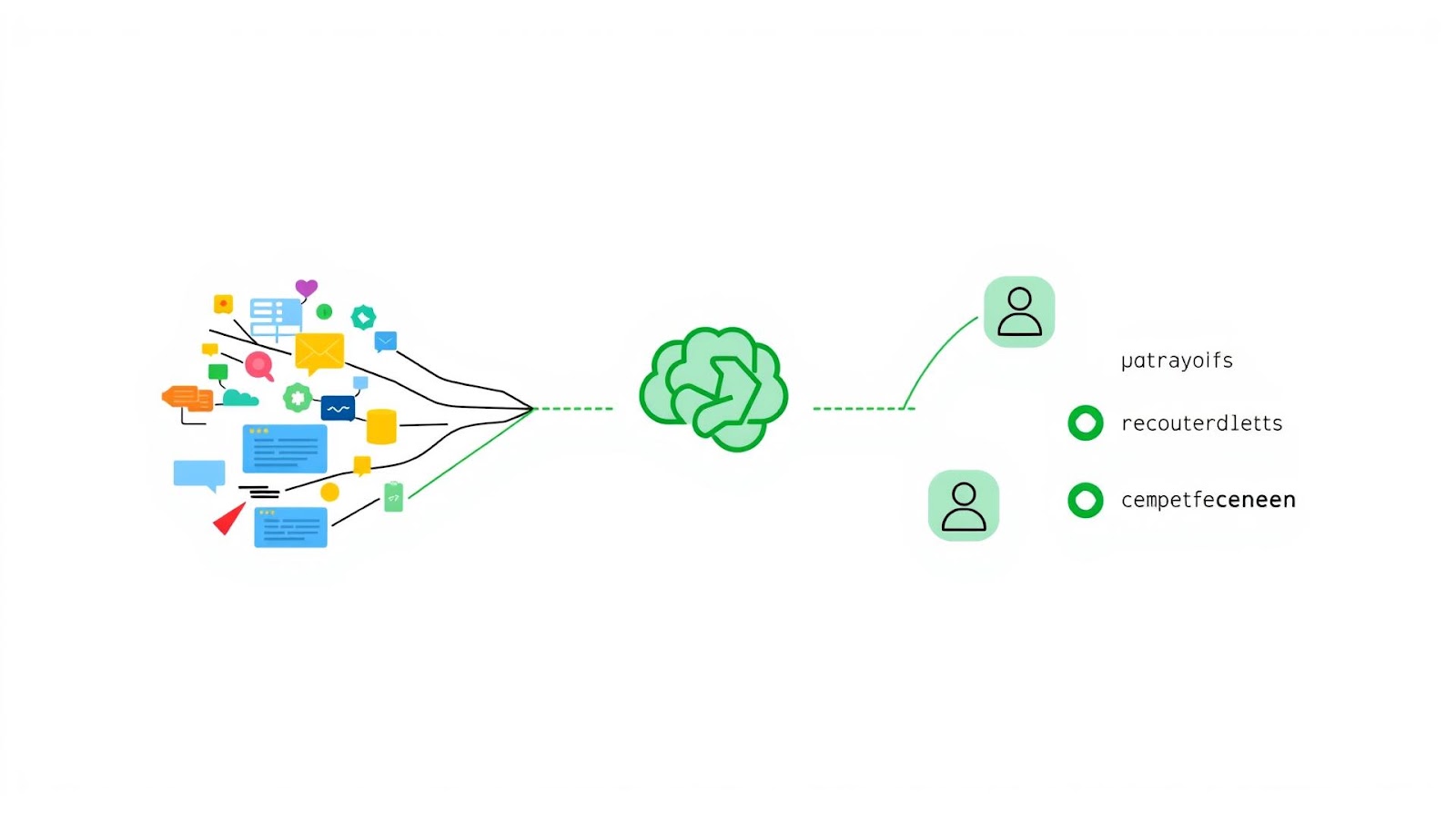
Last week, I opened Instagram and saw an ad for running shoes. I hadn't searched for them. Hadn't mentioned them to anyone. Hadn't even *thought* about them consciously.
But my phone knew.
That creepy moment — you know the one — is machine learning doing what it does best: learning from your behavior without you explicitly programming it. And here's what surprised me when I actually dug into this: it's not magic. It's not even that complicated once you stop treating it like some black-box tech reserved for Silicon Valley bros.
Machine learning is just... teaching computers to learn. From data. From patterns. The same way you learned that your mom's angry voice sounds different when you *actually* messed up versus when she's just tired.
Let me break this down properly, because if you're working in tech, fintech, or literally any modern field in India, you need to understand this. Not the PhD version. The real version.
What Machine Learning Actually Is (Without the Buzzword Nonsense)
Here's the thing: every time you hear "artificial intelligence" or "machine learning," people treat it like it's some futuristic robot thing. It's not. It's just statistics with a better marketing team.
Machine learning is a type of computer program that learns from examples instead of following rigid instructions.
Think about it this way. Traditional programming? You write code. "If temperature is above 30°C, turn on AC. If below 20°C, turn on heater." You decide every rule. The computer just follows orders.
Machine learning? You show the computer thousands of examples. "Here's what spam emails look like. Here's what legitimate ones look like." The computer figures out the pattern *itself*. Then, when a new email arrives, it recognizes which category it belongs to — without you writing a single rule about it.
This is why Zerodha's platform can detect unusual trading patterns. Why CRED knows exactly which credit card offer to show you. Why PhonePe's fraud detection stops transactions you didn't make before you even notice.
They're not following a list of rules someone wrote. They're following patterns they learned from millions of past transactions.
The Three Pillars (And Yes, This is Important)
Machine learning works on three basic principles, and understanding these changes how you think about it:
1. Data: You need examples. Lots of them. Zerodha has years of trading data. Netflix has millions of watch histories. Your bank has decades of transaction records. The more quality data you feed the system, the better it learns. Garbage in, garbage out — literally.
2. Algorithm: This is the method the computer uses to find patterns. It's like giving someone a different technique to spot a counterfeit note. One person might look at the ink color. Another might feel the texture. Different techniques, same goal. There are dozens of algorithms — some simple, some mind-bendingly complex.
3. Iteration: The computer doesn't learn perfectly the first time. It makes mistakes, adjusts, learns from those mistakes, and gets better. Just like you learning to negotiate your salary. First time? Awkward. Fifth time? You know exactly what to say.
How It Actually Works (I'll Use Your Favorite Apps)
Let me make this concrete. Forget theory for a moment.
The CRED Credit Card Recommendation Example
You open CRED. You see three credit card offers. Your friend opens CRED. She sees three *different* offers.
Here's what happened behind the scenes:
CRED has data on *you*: your spending pattern, your income level, your credit score, your age, which categories you spend on (food? travel? shopping?), whether you travel internationally, how much you typically spend per month.
They also have data on millions of other users. They know which cards converted for users *like you*. A 28-year-old consultant in Mumbai with ₹80k monthly spend who travels 4 times a year? CRED knows exactly which card worked for the last 10,000 people matching that profile.
The algorithm is something like: "Given this person's profile, which card will they most likely apply for?" It's literally predicting your behavior based on people who came before you.
And honestly? It works. I've clicked on CRED recommendations I didn't even know I wanted.
The PhonePe Fraud Detection Example
You're at Starbucks in Bangalore. You make a ₹500 transaction. Instant approval.
Two seconds later, someone tries a ₹50,000 transaction in Delhi using your account.
Blocked. Immediately.
You didn't set a rule. PhonePe did. Their system learned that:
— You're usually in Bangalore between 9 AM-6 PM on weekdays
— You make small transactions at cafes
— You never make large transactions from different cities within 2 seconds
— When you *do* travel, your transaction pattern changes predictably
— Similar fraud patterns on other accounts looked like this exact situation
So when something violates your learned pattern, it flags it. No human wrote the rule "block if transaction is in different city within 2 seconds." The system *learned* that pattern works to catch fraud.
This is supervised learning — the system learned from examples of real fraud cases + real legitimate cases.
The Different Types and Why It Matters
Not all machine learning works the same way. And this is where most people get confused.
Supervised Learning: Learning With a Teacher
You show the computer examples WITH the answers.
"This is an email. The answer is: SPAM."
"This is an email. The answer is: NOT SPAM."
(Repeat 100,000 times)
The computer learns the pattern between emails and their classifications. CRED's credit card recommendation, PhonePe's fraud detection — both supervised learning.
Most practical ML today is supervised learning. It's powerful, it works, but it needs labeled data. Someone has to tag those 100,000 emails as spam or not.
Unsupervised Learning: Learning Without a Teacher
You dump a pile of data in front of the computer with *no* answers. "Figure out the patterns yourself."
Amazon does this when it groups similar products together, even though nobody explicitly taught it which products are similar. The system just found that pattern in customer behavior and product attributes.
This one's trickier because you don't know what patterns it'll find. Sometimes it finds gold. Sometimes it finds nonsense.
Reinforcement Learning: Learning by Doing
The computer learns by trial and error. It takes an action, gets feedback (reward or punishment), and adjusts.
This is how chess engines beat humans. How AlphaGo beat Lee Sedol. The system plays millions of games, learns what moves lead to winning positions, and gets better.
And honestly? This one's the future. But it's also the most computationally expensive right now.
| Learning Type | How It Works | Indian Example |
|---|---|---|
| Supervised | Learn from labeled examples | PhonePe fraud detection |
| Unsupervised | Find patterns in unlabeled data | Amazon product clustering |
| Reinforcement | Learn by trial, error, and rewards | Not yet common in Indian consumer apps |
Why You Should Actually Care (Beyond the Cool Factor)
Here's what I realized: understanding machine learning isn't just for data scientists. It affects your life *daily*.
Your health insurance company uses ML to assess risk. Your loan application uses ML to determine if you qualify. Dating apps use ML to show you compatible profiles. YouTube's recommendation algorithm is ML.
And the scary part? Most of us have zero idea how these decisions are being made. We just accept the output.
If you work in any field — marketing, operations, customer service, even HR — ML is creeping into your job. Understanding how it works means understanding why certain decisions are being made. It means recognizing when something's off. It means having a conversation with your data team in their language.
This one surprised me: companies that understand ML (even at a basic level) make better decisions. They know what data matters. They know what questions to ask. They know why an algorithm's output might be wrong.
And if you're thinking about your career? Data and ML skills are in stupidly high demand right now. Even basic understanding makes you valuable.
The Real Limitations (Because Nobody Talks About This)
Machine learning is powerful. It's also deeply flawed.
It needs mountains of good data. If you're a startup with 6 months of transaction history, your ML models are mediocre. Netflix can recommend movies because they have *decades* of watch data. You can't.
It learns biases from the past. If your training data shows that loan approvals were biased toward men, your ML model will learn that bias and replicate it. This is a real problem in Indian fintech — we're automating discrimination without realizing it.
It fails in unexpected ways. A model trained on spam emails from 2015 won't recognize 2024 spam. A fraud detection system trained on pre-COVID spending patterns failed spectacularly when everyone started spending online during lockdown.
And here's the thing that keeps me up at night: once a model is deployed, most teams don't monitor it carefully. They assume it works. But the world changes. User behavior changes. The patterns the model learned become outdated.
Final Thoughts
Machine learning isn't magic. It's not going to replace human judgment (despite what Silicon Valley wants you to believe). It's a tool. A genuinely useful one, but a tool nonetheless.
What matters is understanding *how* the tool works so you know when to trust it and when to be skeptical.
That creepy Instagram ad for running shoes? It wasn't your phone reading your mind. It was an algorithm recognizing patterns in your behavior that looked like someone shopping for running shoes. Which is... actually less creepy when you think about it? And definitely less magical.
If you work in tech, finance, or product, spend time understanding the basics of ML. You don't need to code. You need to know the language. You need to understand what questions to ask when someone says "we trained a model."
And if you're just scrolling through life wondering why your apps know you so well — now you know. It's not because they're watching you. It's because they're *learning* from you. Which, paradoxically, is something you can actually control by being more intentional about what data you feed them.
Start small. Pick one app you use daily. Think about the pattern recognition happening behind the scenes. Then ask yourself: Is this pattern real? Is this decision fair? Would I make the same call?
That's how you actually understand machine learning. Not from reading this blog post. From being curious about your own digital life.
Written by Dattatray Dagale • 12 April 2026




.png)
.gif)



0 Comments