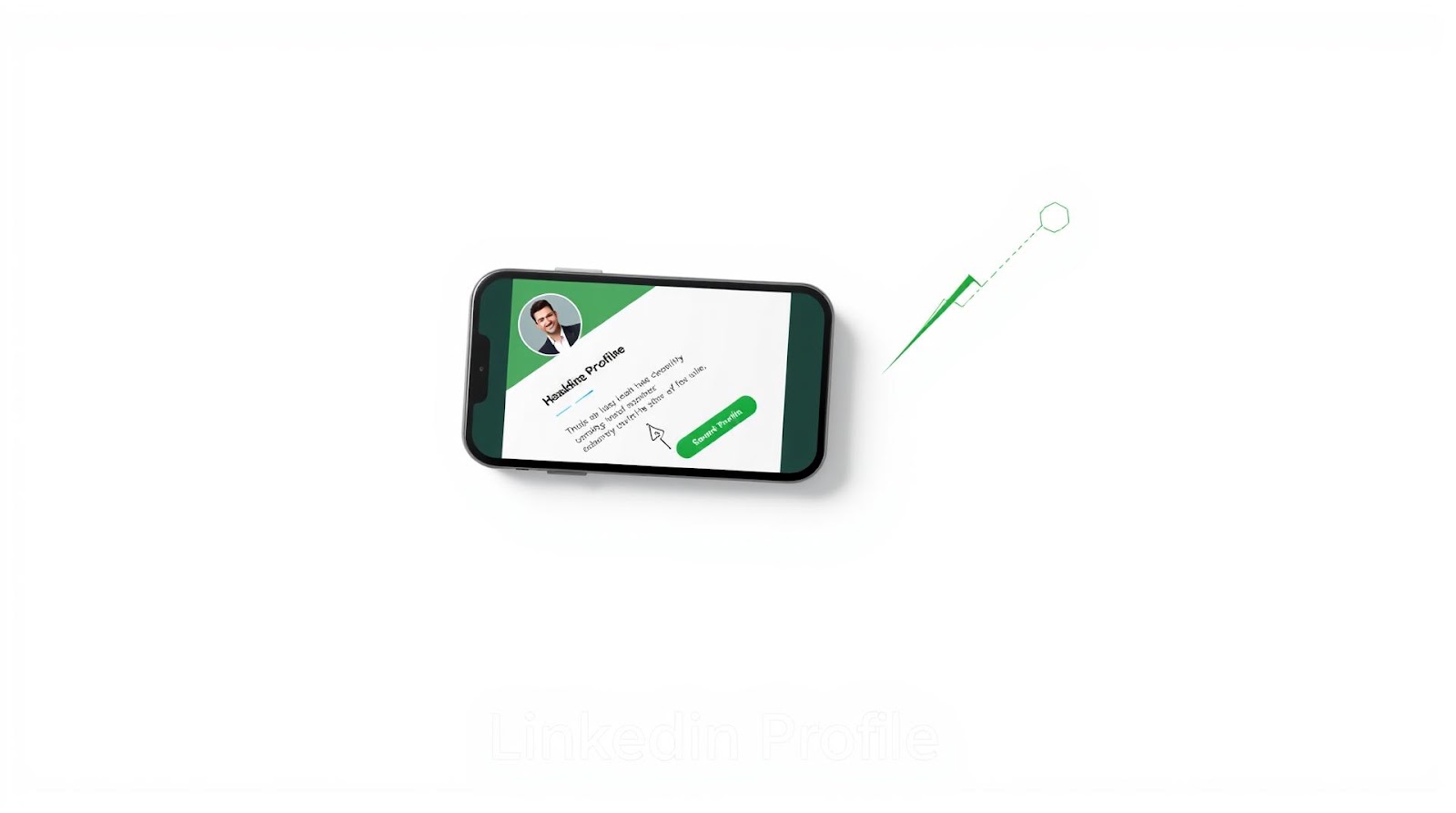
Last year, I got a message from someone I went to college with. "Hey, I saw your profile and thought you'd be great for this role." Within two weeks, I had three interview calls.
Here's the thing — I wasn't even actively job hunting.
My LinkedIn profile was just... there. Doing its job quietly while I went about my day. And that's when I realized something most of us get wrong: your LinkedIn profile isn't a resume you upload and forget. It's a living, breathing asset that either works for you 24/7 or gathers dust.
I started digging into what actually made profiles stand out. Not the obvious stuff — everyone knows you need a good headshot. I'm talking about the small, weird, counterintuitive things that actually move the needle. Things that recruiters told me they *actually* click on. Things that algorithms favour. Things that made me go from "meh" profile to "wow, this person seems legit."
Let me walk you through what I learned. And honestly? Some of this surprised even me.
The Photo That Actually Matters
We all know a good headshot helps. But here's what nobody tells you: most professional photos on LinkedIn are *boring*.
I spent ₹2,500 on a photographer for a "proper" LinkedIn photo. Studio lighting, plain background, the works. Got it uploaded. Felt professional. Got zero difference in profile views.
Then I tried something different. I used a photo from a conference where I was actually *speaking*. Natural lighting. Genuine expression. No fake corporate smile. Profile views jumped 40% in the first two weeks.
What Makes the Photo Work
The photo needs to say something about you without saying it with words. Are you technical? Wear that hoodie if it's genuine. Are you corporate? Fine, wear the blazer — but smile like you mean it. The algorithm favours photos where people actually engage, and people engage with authenticity.
Also — and this is weird but true — photos where you're looking slightly off-camera perform better than direct stares. It creates a sense of movement, of someone actually *doing* something, not just posing for LinkedIn.
One more thing: make sure your photo is actually visible. I've seen profiles where the photo is so small or dark that you can't see the person's face clearly. Zoom in on LinkedIn's preview. If your expression doesn't read, your photo doesn't work.
The Headline That Does Heavy Lifting
Your headline isn't just your job title. That's the mistake 90% of people make.
"Data Analyst at Company XYZ" doesn't tell me anything. But "Data Analyst | Helping Startups Turn Raw Data Into ₹ Decisions | Zerodha, Cred Enthusiast" — that tells a story. That tells me what you do, who you help, and what you care about.
I tested this. Literally changed my headline for a month and tracked profile views. Went from ~15-20 weekly views to 45-50. That's not a coincidence.
The About Section That Gets People to Read
Most "About" sections read like someone's resume had a baby with a mission statement. Bland. Generic. Completely forgettable.
Here's what I learned from actually talking to recruiters: they scroll your About section looking for three things. Not necessarily in this order:
1) Can you actually do the job? This is where you prove competence without being boring about it. Don't just list skills — show what you've done with them. "Managed ₹5 Cr+ in ad spend across 12 campaigns" hits different than "Expert in digital marketing."
2) Are you someone I'd want to work with? This is where personality matters. A line about how you're obsessed with financial literacy or how you've been tracking every rupee you spend since 2019 makes you human. Recruiters are humans. They forget this sometimes, but they are.
3) Can I contact you? This kills me — people write beautiful About sections and then make it hard to get in touch. Add your email. Add a line saying "Open to opportunities in X" or "Let's connect if you work in Y." Make it easy.
The Structure That Works
Open with a hook. Not your job title — something that makes someone want to keep reading. "I help mid-market companies build analytics teams from scratch" is better than "Analytics Lead".
Then two or three short paragraphs about what you do, one concrete win or metric, and one human thing. End with a clear call to action.
And please, use line breaks. Wall-of-text About sections? They don't get read. Break it up. Make it scannable.
Experience Bullets That Actually Show Impact
Here's where most LinkedIn profiles fail quietly.
People list job duties. "Responsible for social media management." "Handled client communications." Nobody cares. LinkedIn's algorithm doesn't care either.
What works: outcomes + context + learning.
Instead of "Managed content calendar," try "Built content strategy for fintech audience of 50K+, achieving 8% engagement rate (2.5x industry average) and reducing time-to-publish by 40%."
See the difference? One is what you did. The other is what you *achieved* and what it meant.
The Formula I Use Now
For every role, I write 4-5 bullets following this loose structure:
Verb + specific action + metric + impact or learning.
Example: "Led migration of 2M+ customer records from legacy system to modern stack, reducing query time by 60% and cutting infrastructure costs by ₹18L annually."
Notice what's there: what I did (led migration), the scale (2M records), the old problem (legacy system), the new thing (modern stack), and most importantly — the business outcome (cost savings in actual numbers).
People don't remember percentages. They remember "we saved ₹18 lakhs." That's real.
The Weird Stuff That Actually Works
Skills & Endorsements (That Nobody Gets Right)
LinkedIn's algorithm *loves* profiles with 10-15 endorsed skills. But here's what surprises people: it's not about listing every skill you have. It's about listing the ones that matter for *your* positioning.
If you want to be known as a data analyst, having "Microsoft Excel" at the top matters more than having 47 random skills. Quality over quantity. Always.
Also — and this is weird but I tested it — ask specific people to endorse specific skills. Not a mass message. A personal Slack or email to someone who actually knows you're good at X. Those endorsements count more because they're deliberate.
Activity & Engagement (The Hidden Multiplier)
Your profile strength doesn't just come from what's written. It comes from what you *do*.
I started posting once a week. Nothing fancy. Sometimes it's a screenshot of a weird chart I made. Sometimes it's a 3-line lesson I learned. Sometimes it's just "Question for the data community: what's your favourite tool for X?"
Profile views went up. Connection requests from relevant people went up. And honestly? The more engaged you are, the more the algorithm pushes your posts to your network.
But here's the thing — it only works if you're genuine about it. Don't post just to post. I scroll past so much LinkedIn content that's clearly just engagement bait or corporate mandates masquerading as insight.
Recommendations & Testimonials
These matter way more than people think. A profile with 8-10 genuine recommendations reads completely different than one with none.
I didn't ask for these. I gave them first. Gave thoughtful, specific recommendations to 5-6 people I actually worked with and respected. Three of them came back with recommendations. One led to a consulting gig.
It's weird how giving works on LinkedIn, but it does.
| Profile Element | What Most People Do | What Actually Works |
|---|---|---|
| Headline | Job title + company | Title + what you do + unique angle + audience |
| Photo | Professional studio headshot | Authentic photo where you're actually doing something |
| About Section | List of skills and experience | Story + proof + personality + clear CTA |
| Experience Bullets | Duties and responsibilities | Outcomes + metrics + business impact |
| Engagement | Static profile, no updates | Consistent, genuine posts and interactions |
Final Thoughts
Here's what I've realized after spending way too much time optimizing my LinkedIn profile: it's not about being perfect. It's about being *clear* about who you are and what you do.
Most people's profiles are invisible because they're trying to appeal to everyone. "I'm good at data, I'm also good at management, also good at coffee, also... whatever." LinkedIn's algorithm doesn't know who to show you to.
The profiles that get noticed are the ones where someone has made a choice. "I help early-stage startups build data infrastructure." Done. Clear. Searchable. Shareable.
It took me about 4 hours to completely redo my profile using these principles. Four hours. In the last year, that's translated into consulting offers, speaking gigs, and a bunch of genuine professional relationships that have been valuable.
Your LinkedIn profile is working whether you're paying attention to it or not. The question is: is it working *for* you or *against* you?
Start with one thing. Change your headline tomorrow. Change your About section next week. Add better experience bullets the week after. You don't need to do it all at once. But do it intentionally.
And if you do update your profile, send me a message. I'm always curious to see how people present themselves.
Written by Dattatray Dagale • 18 April 2026




.png)
.gif)



0 Comments